
In the era of being stuck in the chronic loop of doomscrolling, content consumption, fatigue, and repeat, sometimes I wonder: What do we really manage to retain, given our attention span these days lasts as long as a jellyfish’s memory cycle does?
Reading books has now been deemed as one of yesteryear’s prestige traditions; one that doesn’t serve any practical purpose, since we all live in the age of pace and anything that even minutely points to a slower direction is often branded as “tedious” and “time-consuming.” And because there already are an ample number of “influencers” swarming in the internet universe whose only job is to vomit unverified information on the go with delirious transition effects and without proper research and context, who cares a damn about spending a few days (or hours) devouring some 300-odd pages that could help us with building perspective!
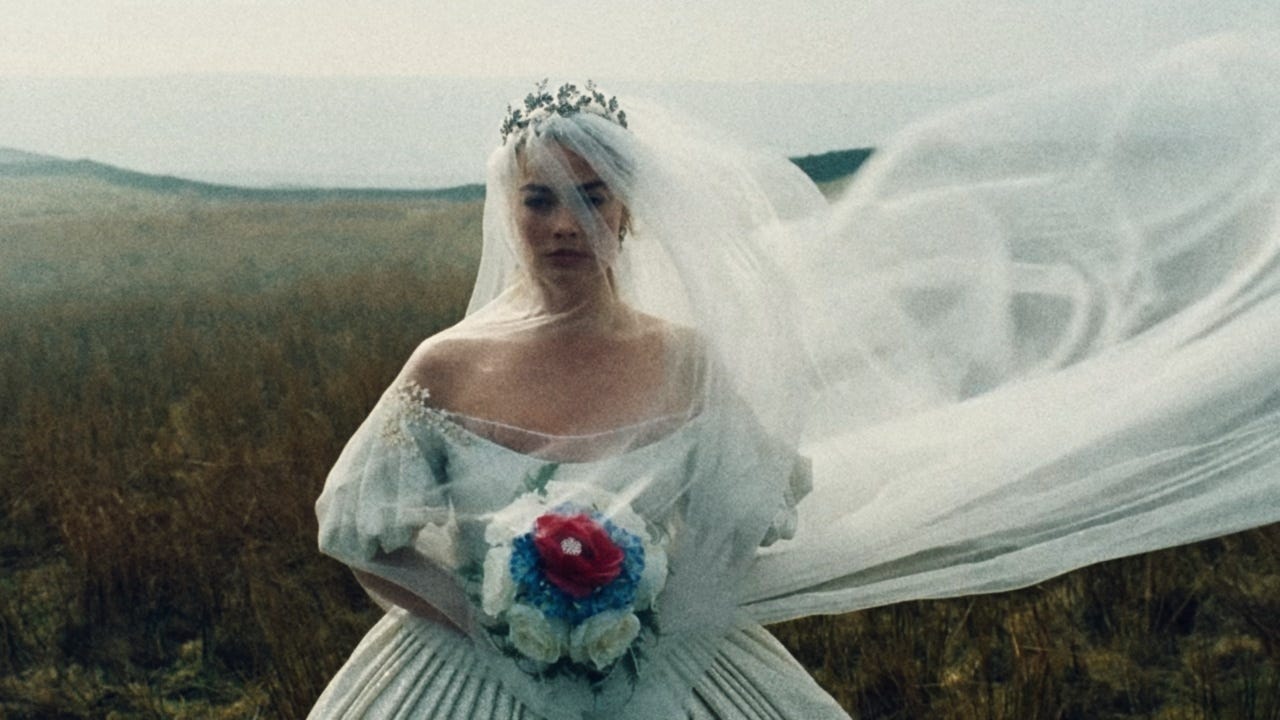
But then comes a film like ‘Wuthering Heights’ in 2026, as a “version” of Emily Brontë’s classic novel that was first published in 1847, and my heart leaps in joy — perhaps, there are still people left who are so happy burying their heads in books! And not only do they find pleasure in being bookworms, but they are also enthusiastic about re-telling the stories — in their own way — so that the story lives on! Because who else would pick up a nearly 200-year-old classic and decide to make a film based on that story if they didn’t enjoy every bit of the reading experience of that book?
Turns out, the otherwise scenario is entirely possible — Emerald Fennell has proven it, with her new film ‘Wuthering Heights’. Those who have read Brontë’s ‘Wuthering Heights’, and watched Fennell’s film, can vouch: either Fennell did not read the book (or maybe read a wrong book with the same thrifted cover), or she just DID NOT READ THE BOOK Enough To Really Understand It.
For the unversed, I’ll do a quick recap.
Wuthering Heights, written by one of the Brontë sisters, Emily Brontë, is a novel set in the late 18th century and early 19th century, on the bleak, isolated Yorkshire moors in Northern England. Sure, the story, as the lore of lovers’ tropes has normalized it, revolves around Cathy (Catherine Earnshaw) and Heathcliff — but in all truth, it takes into account multiple characters like a portrait of an assembled cast. There are the Earnshaws, the Lintons, and more. In fact, contrary to popular belief, Brontë’s Wuthering Heights is not at all a love story; rather, it’s a social commentary in the form of a story steeped in class, race, color, ethnicity, exclusion, and their inevitable consequences. Brontë did not write the novel as an ode to Cathy and Heathcliff’s “love” — if at all, it can singularly be called love — she created a deeply passionate, dark, and often savage exploration of destructive obsession, revenge, and Gothic horror, of which Cathy and Heathcliff’s intense bond is an integral part.
Wuthering Heights earned the tag of a “classic” because Brontë managed to stitch all those elements together and gave it the shape of a story that’s become a lore through generations of readers and storytellers for its unparalleled nuances — not simply because Cathy and Heathcliff could not keep their hands off each other.
Now, I don’t claim to be a mouthpiece for Brontë, but as an ardent reader (and lover) of a novel whose violence, social cruelty, and racial language make the text thoroughly displeasing, Wuthering Heights refuses linear sentimentalization. Sure, a great literary work is always open to interpretation, re-imagination, and more — as it should be — but when that “re-imagination” strips away the very scaffolding that makes the original text politically and ethically uncomfortable — it’s worth outraging on.
Because yes — It’s THAT Deep.
Don’t get me wrong, Fennell’s Wuthering Heights isn’t entirely a “trash content.” It has a “hot” leading pair — Margot Robbie and Jacob Elordi — sensationalized enough to bring the audience to the theatres. It has Charli XCX crooning original songs for the film, which again is quite a bratty feat, given she’s predominantly a popstar and we’re talking about a story set in the pre-Victorian era. The cinematography of the film deserves a standing ovation, as well as the recce team — the shooting locations are a treat to the worn-out eyes that have been dealing with screen fatigue.
In short, the film manages to nail the Instagram-worthy aesthetics to the T: it’s visually spectacular, highly stylized, and incredibly polished to an extent that it smoothens almost all the grit and rough edges that actually were the winning elements of the story in the first place.
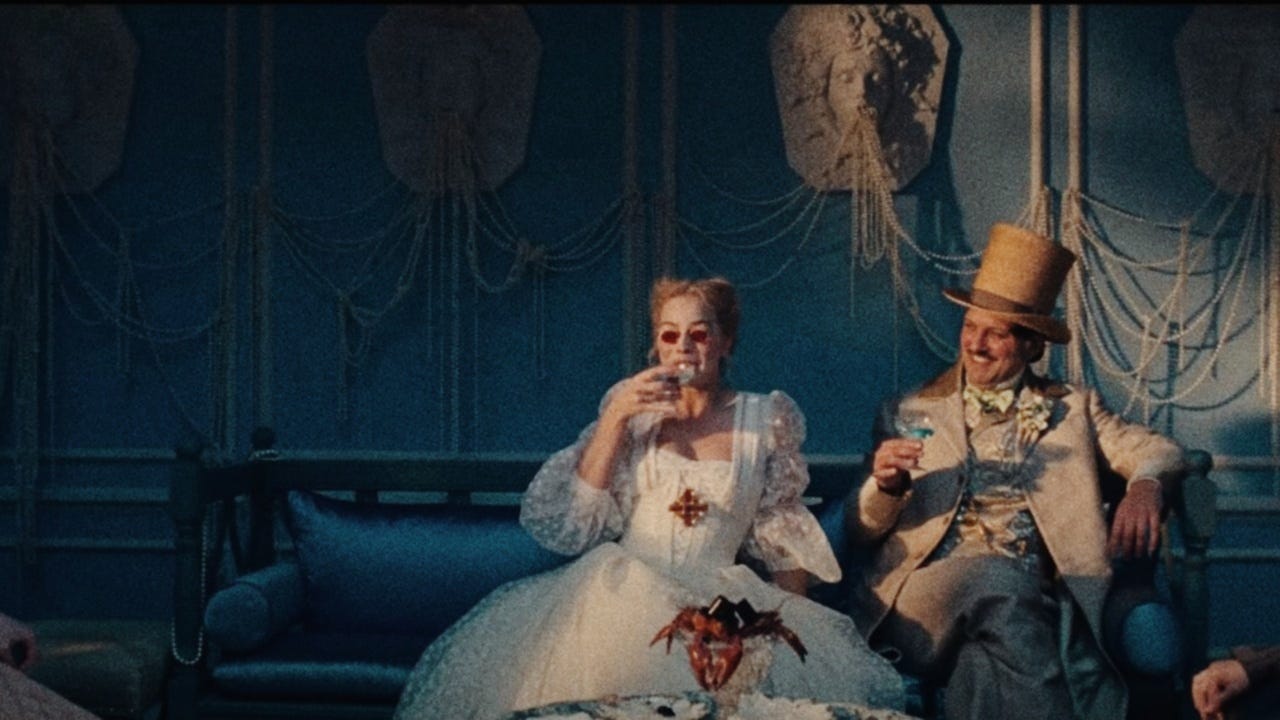
But that’s the point: Instagram aesthetics, in most cases, don’t have a soul; they’re just unnecessary embellishments without any substance whatsoever.
Fennell’s Wuthering Heights takes that embellishment part to such a height that the substance of the story gets left behind on the foggy moor, lurking somewhere without any direction.
Now, there’s something stereotypically baffling about a film shot in the middle of a foggy moor — everything and everyone coming out of that dense coating of fog is considered to be adding some layer(s) and depth to either their own characters or to the story itself. As if the fog is the visual metaphor and representation of the extent of intensity of the film. Fennell takes that generic approach, too seriously and too religiously, in her film, and that’s only the tip of the iceberg of problems with her version of Wuthering Heights.
The first and most blatant audaciousness on Fennell’s part? The casting of Heathcliff.
On the pages of Brontë’s Wuthering Heights, Heathcliff is known as “a dark-skinned gipsy,” or “Lascar,” which is a word for a sailor, army servant, or artilleryman hailing from either India or Southeast Asia. Do a bit of digging, and you’ll know that the word “lascar” is an early 17th century word that comes from Portuguese lascari, or from Urdu and Persian laškarī ‘soldier’, from laškar ‘army’. Although his “foreign” ancestry is not pinpointed, from the first pages, Brontë’s Heathcliff is racialized.
Pay attention to Brontë’s text, and you’ll see that the novel uses race, color, and outsider language repeatedly to box Heathcliff — essentially “othering” him from the Earnshaws, even from the Lintons. Sure, whether Heathcliff is explicitly Black, Indo-European, African, Romani, or mixed is still debated; but the book’s repeated attention to skin, origin, and racial and social otherness functions as more than a decorative detail that one might perceive as “insignificant.” In fact, this very racial and social othering and class barrier fuel Heathcliff’s rage and revenge. That point of exclusion works as a mechanism that structures how the Earnshaw and Linton families behave toward him and how the surrounding society treats him, always keeping class as an effective barrier. Once you understand that subtext, you make ways to jump the mass-fed trope of Wuthering Heights being a tragic love story, because — let’s establish this for once, and all — every bit of classic English literature isn’t all Shakespearean, and it doesn’t have to be, either.
Fennell should have understood that clear distinction from the get-go — it’s not too much to ask for, from a writer-director who won an Oscar for her debut directorial film, Promising Young Woman.
Instead, Fennell walked the familiar road — one that’s been taken one too many times — being inauthentic to Brontë’s text, and in due course, entirely erasing the novel’s rhetorical choices that triggered and aligned Heathcliff’s exclusion with the class and racial hierarchies of nineteenth-century Britain.
Now, this isn’t new in Hollywood — the entertainment industry predominantly recognizes white people as conventionally “good-looking.” Even if and when one is adapting from a book that specifically mentions its characters’ race and skin color, Hollywood and most filmmakers exhibit a certain kind of adamance — and they get away with that — casting white actors to make the characters appear more attractive and palatable.
Wuthering Heights has been suffering from this whitewashing since Adam. In fact, for generations of filmmakers, Heathcliff’s ambiguous racial identity posed an uncomfortable question with no satisfactory answer. Most classical screen versions of Brontë’s novel sidestepped it; many cinematic Heathcliffs have been conventionally white, even.
Only Andrea Arnold’s 2011 film made a bold choice by casting a biracial actor and insisting on the character’s marginality — it was one modern correction to a long history of visual erasure.
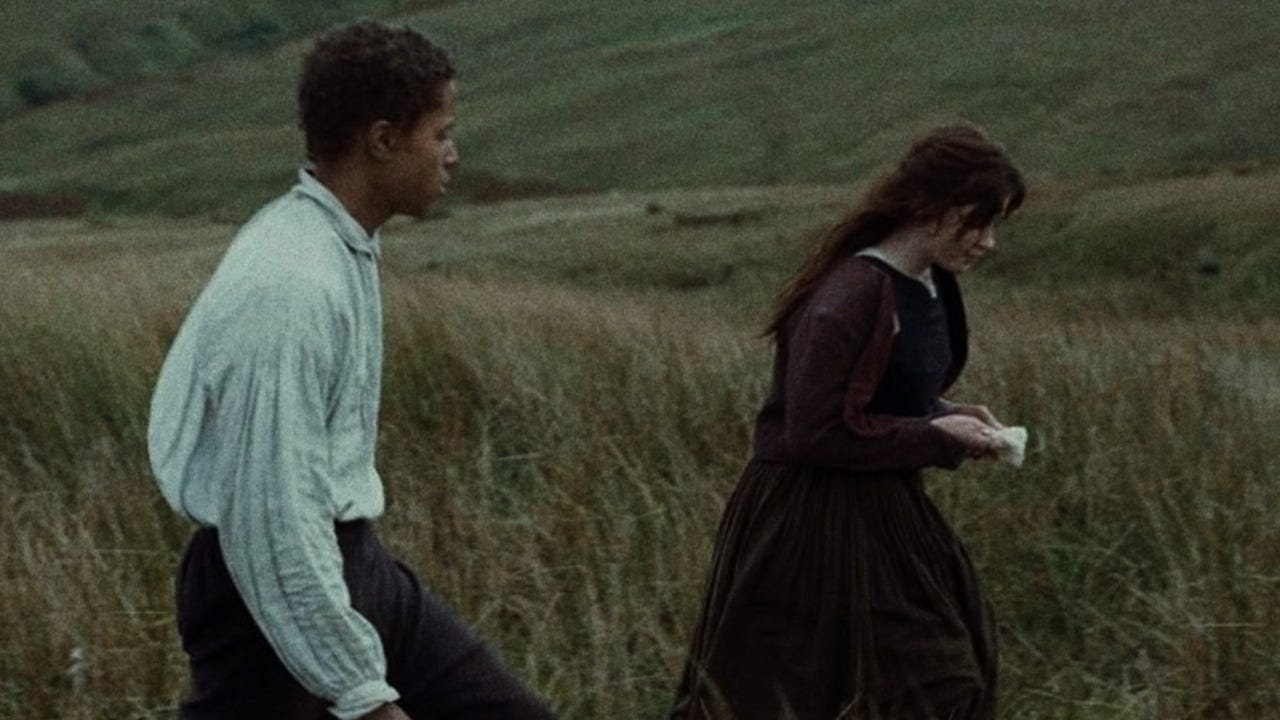
However, 15 years later, Fennell’s 2026 film has managed to return to the old, familiar pattern: Jacob Elordi, a conventionally attractive, white leading man, becomes eligible to play the role, whereas a plethora of potential choices like Dev Patel, Riz Ahmed, Regé-Jean Page, and more are ignored, or not even considered.
Why? Because Emerald Fennell thinks: “You can only kind of ever make the movie that you sort of imagined yourself when you read it.”
Imagined? IMAGINED??
By definition, “imagination” occurs when clarity is somewhat absent. But how does one imagine Heathcliff as a white guy when Brontë’s text clearly portrays him as a “dark-skinned” outsider?
Why imagine something so unhinged and thoroughly out of context when it’s explicitly mentioned in the source material? Stunning how white supremacy rules one’s imagination even!
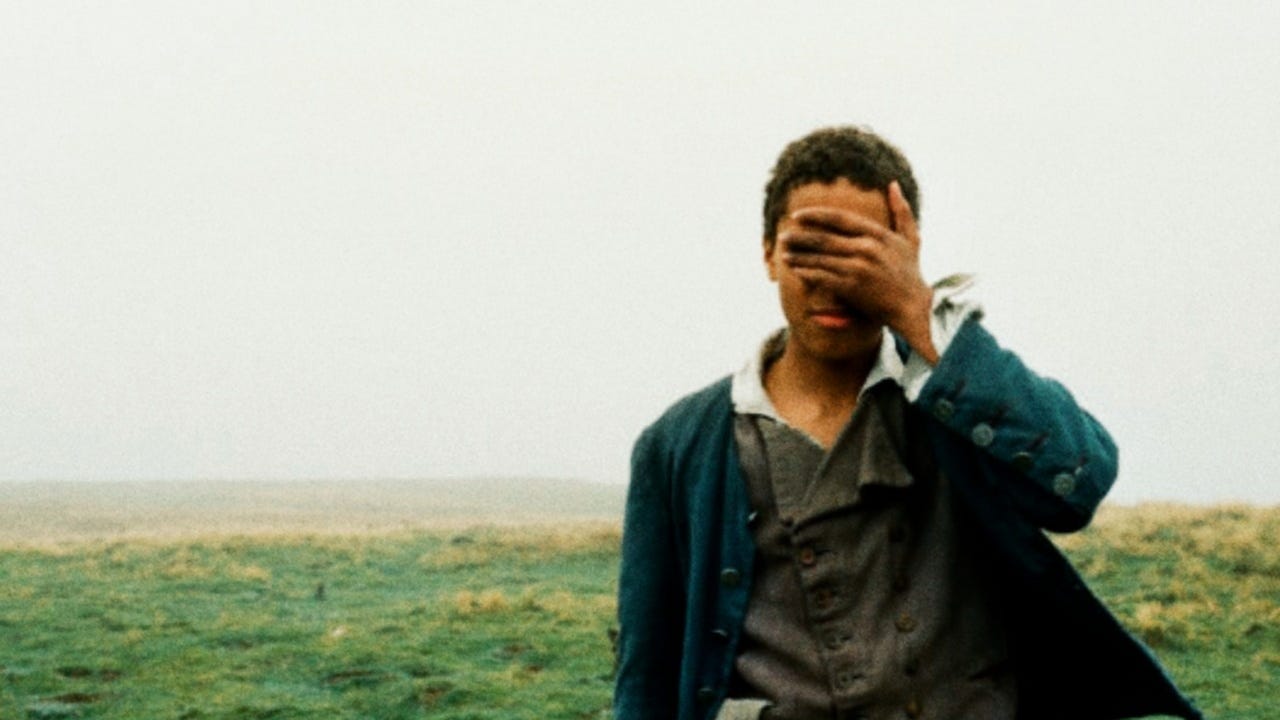
Why does this whitewashing matter so much, you ask? Why so much outrage about just the skin color? Because it’s not “just the skin color” — history has borne witness, it’s the erasure of class, color, race, ethnicity, and hence, identity. This erasure removes the way race and the ringing fear of racial difference shape Heathcliff’s formative years and his later fury.
And you know what makes it even worse?
Shazad Latif, a brown man of mixed Pakistani, English, and Scottish descent, being cast as Edgar Linton, who, by Brontë’s text, is the epitome of Victorian gentility (described as “a fine handsome boy” with fair features), and his family having English gentry.
This is where the ulterior motive of white supremacy plays out more evidently.
Fennell’s not-so-simple swap of casting Heathcliff as a conventionally attractive white man as the lead male protagonist, while he was mentioned as a “dark-skinned” guy in the book, and choosing a person of color for the supporting role, while that very character was white in the original text — this plays right into the white supremacy narrative that states, white people take the frontrow seats while people of color fight for a seat at the back.
This is where the hypocrisy on Fennell’s part — either a conscious choice or otherwise — brews, and the discourse of selective inclusion — which honestly is worse than exclusion — gets murkier. It is as though the filmmaker is open to having an inclusive cast, but the frontrow is strictly reserved for white actors. In fact, this hierarchical casting choice actually reinforces the idea that whiteness belongs in main roles, while people of colour are acceptable only in supporting positions.
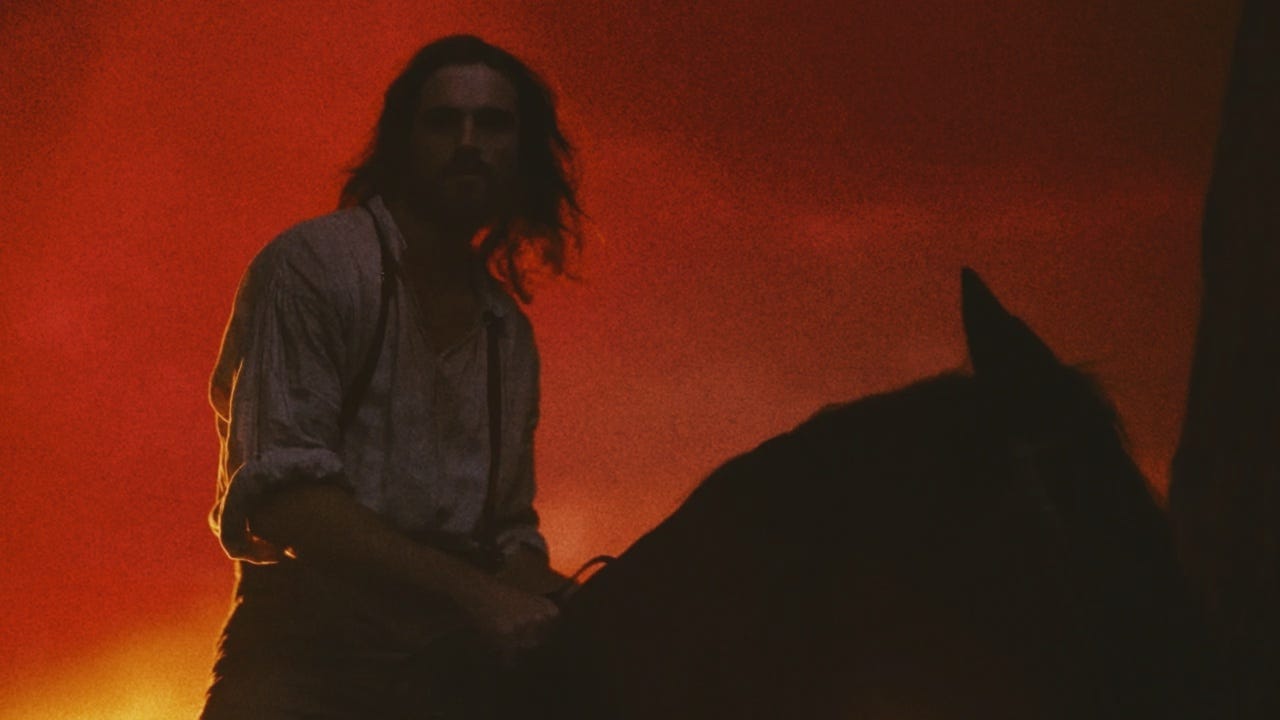
Remind me, how many more ways are left there to spell white supremacy?
Then, there are structural alterations and reworking of character arcs that I’m sure are making Brontë roll in her grave. Truly, that woman suffered enough in her life, passed away when she was just 30, battling with tuberculosis, and still, this abomination in the name of a “version” of her creation, perhaps, is the worst possible thing to have happened to her.
Imagine someone making Wuthering Heights without Hindley Earnshaw… imagine Heathcliff growing up with Hindley’s constant cruelty and provocation. Would Heathcliff grow up to become someone so high on vengeance, with an aim of exacting revenge as a response to loss and grief, had Hindley’s poisonous, racially prejudiced treatment not been one of the most dominant undercurrents in his life? Not quite.
And lo and behold, Fennell not only chooses to chop Hindley’s character out of her version of Wuthering Heights, but she also makes a decision to simply add some of his character traits to Mr. Earnshaw’s character.
As per Brontë’s text, Mr. Earnshaw — Cathy and Hindley’s father — is a stern, moody, yet somewhat kind man who takes Heathcliff in, and later goes on to sometimes favor him over his own children. This very favoritism becomes the bane of Hindley (and Heathcliff as well), who is the tormented heir in the book — jealous of Heathcliff’s treatment by his father, he eventually becomes Heathcliff’s brutal oppressor after Mr. Earnshaw dies, forcing Heathcliff into servitude. In a way, Hindley’s behavior towards him is something that pushes Heathcliff to unleash his inner maniac streak, full of vengeance and violence.
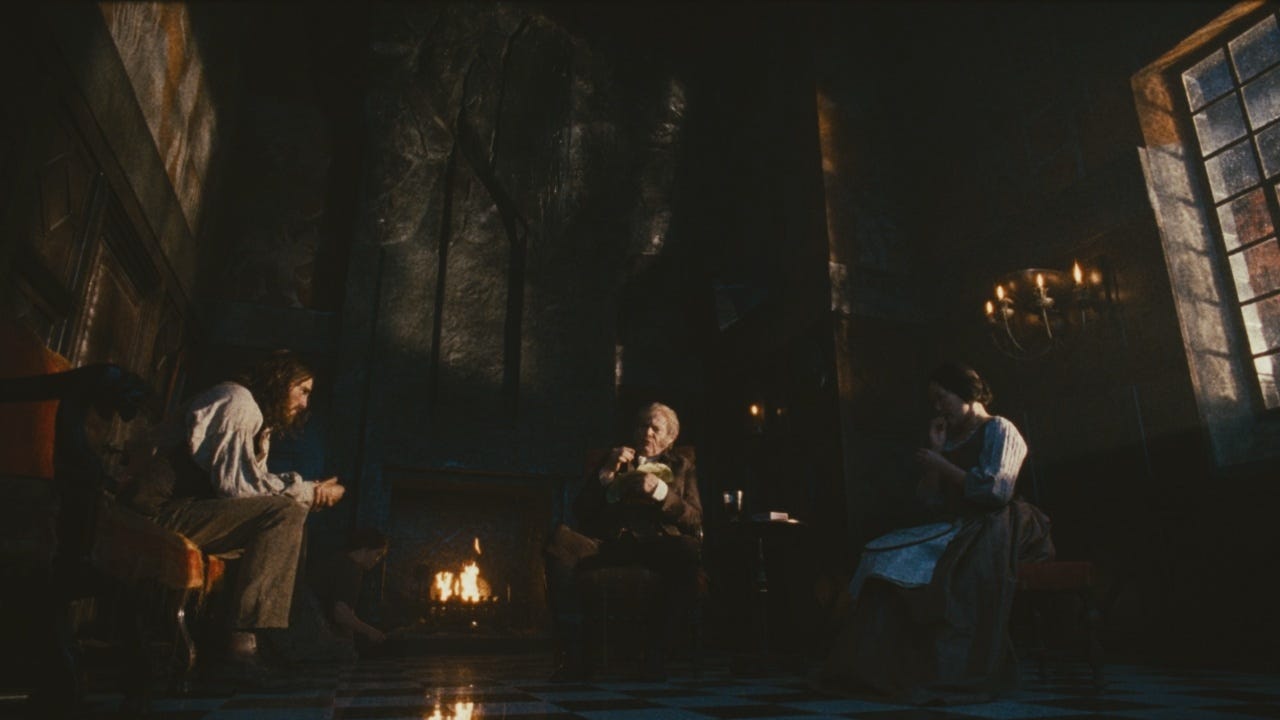
In the film, Fennell simply reassigns all of Hindley’s destructive traits — drinking, gambling, and cruelty — to Mr. Earnshaw. This crunching of two contrasting characters into one, this compression, invariably removes a core conflict: the novel’s “class resentment” is driven by Hindley’s hatred, and Cathy’s family is fractured between two very different male heirs. And this is extremely vital because Hindley’s violence toward Heathcliff is not merely a plot — it is a result of an acute social engineering. His rise to the Heights, his reduction of Heathcliff to servant status, and his later fall into ruin generate the crucial cycle of dispossession and revenge. Removing Hindley not only collapses the book’s multi-generational architecture, but there’s also no longer a clear dichotomy between childhood humiliation and young adult structural vengeance.
In fact, by Fennell’s logic in the film, Mr. Earnshaw simply shifts from a doting benefactor to a sudden tyrant for no explained rationale. The removal isn’t just an “artistic choice” that one can exercise without any consequence: the result is that Heathcliff’s slave-to-master trajectory collapses into a single generation. The glaring contrast between a kindly adoptive father and a vicious elder brother, which illustrates how class and jealousy shape Heathcliff in the book, vanishes into thin air in the film. And while Fennell focuses solely on Cathy and Heathcliff’s bilateral, obsessive coupling, the socio-political scenario that catalyzes the same destructive obsession, fueled by toxic attachment issues, in the first place, remains largely unexplained.
It’s not Hindley’s removal — Fennell takes her “artistic freedom” a notch higher, rewriting Nelly Dean’s character as an evil caregiver. In Brontë’s book, Nelly is from Yorkshire, effectively making her hailing from the white working class of women. But in Fennell’s version, Nelly is reinvented as a bastard daughter of a nobleman (although the film doesn’t explore what that actually means) and played by an Asian-American actress, Hong Chau.
More points for seriously questionable casting!
Then, Brontë’s Nelly is the novel’s interpretive lynchpin of the story — almost like an ambiguous moral center, who is not always reliable, but almost always present. In fact, Nelly plays the part of a readerly guide who makes the whole story possible; her near-omniscience and biases shape the entire narrative of the story — not just of Cathy and Heathcliff, but of their next generations as well. In fact, in the book, Nelly cares deeply about Cathy and Heathcliff, even as her judgment is sometimes tainted by her own loyalties.
For her version, Fennell plucks Nelly’s character out of the novel, takes a rather antagonistic reading of her, and really runs with all that villainy. She chokes Nelly’s voice as the narrator and somewhat of a mother-figure to Catherine; instead paints her on screen as a more crooked, sometimes spiteful presence, while eliminating many of the “human moments” that soften and humanize her in the book. Forget the rich potential to explore colonial-era prejudice or classism, even in the white society; Nelly’s repositioning as a twisted, jealous, manipulative “companion” to Cathy diminishes the layered mediation the book has, where the story is told through a partial, implicated consciousness.
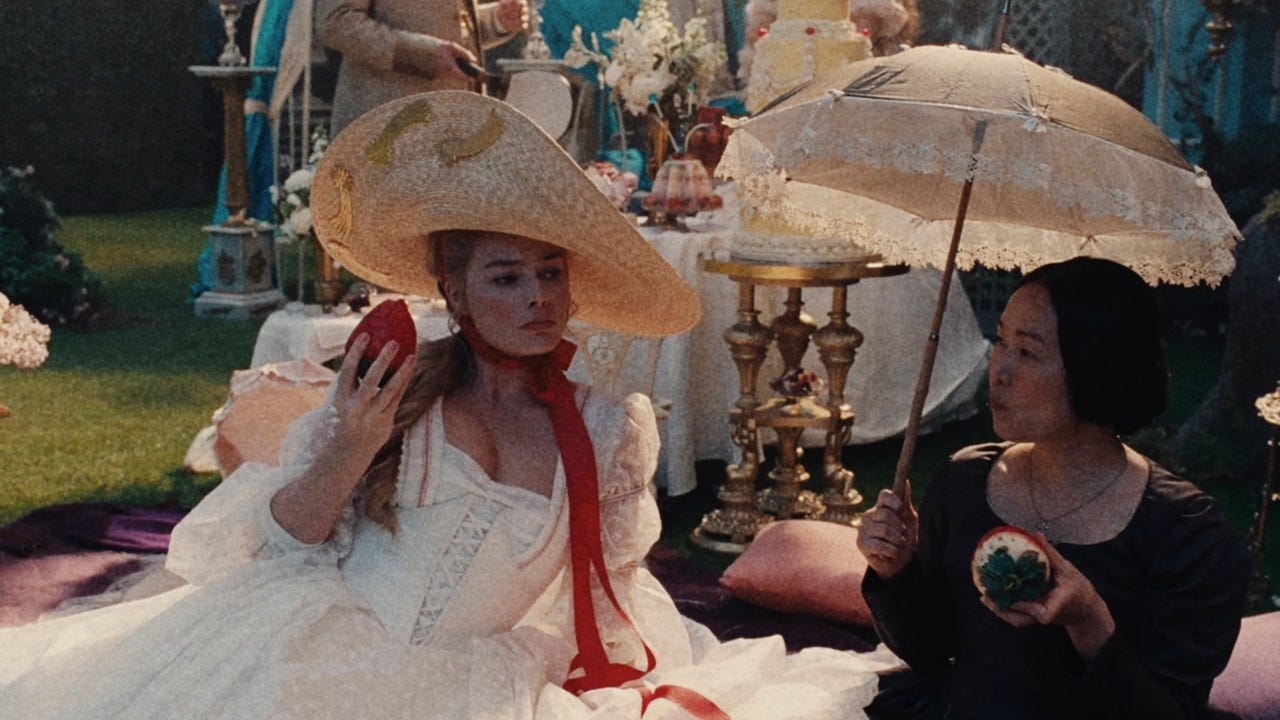
And then, finally, Fennell brings out her version of Isabella — a character Brontë created that goes as close as to be an empowered woman in that era and amidst all that obsessive madness, and she ends up dragging that character to the ground into becoming a fetishized, dog role-playing, consenting sub.
Isabella’s reworked character arc in the film is probably the most jarring one, especially for those who have had the good fortune of reading, knowing, and empathizing with Brontë’s Isabella. In Brontë’s novel, Isabella Linton is the smart, enthusiastic, slightly repressed, but spirited little sister of Edgar, who passionately — naively, even — falls for Heathcliff. When Heathcliff marries her out of vengeance and spite, he becomes downright abusive towards her. There’s no mincing the words here — Heathcliff becomes a violent beast who strangles her pet dog, terrorizes her to the extent that she writes to Nelly about her state of marriage, calling him a “monster.” Isabella eventually finds a way to escape Heathcliff’s clutch while she’s pregnant, and she ends up raising her son on her own. Talk about bravery and courage, and in Wuthering Heights, none compares to Isabella. In fact, Brontë portrays Isabella as a feminist of sorts for her time, walking away (running, rather) from violence and eventually carving out a new life for herself and her child.
In Fennell’s version, Isabella is nothing beyond a fetishized and submissive individual, who seems to be turned on by Heathcliff’s manic streak of abuse and violence, and his outright dehumanization of her. It’s, in fact, extremely disturbing to watch Isabella, dog role-playing (yes, in one scene Heathcliff has Isabella crawling on the floor like a dog on a leash) like a consenting adult in an abusive marriage with Heathcliff. Fennell paints Isabella in a way that gives away the idea that she might even be enjoying her constant degradation and even embracing it wholeheartedly, rather than suffering through it — which is actually the trajectory Brontë’s book suggests.
And this flips Brontë’s original dynamics: Brontë’s Isabella is a victim, as well as a survivor, of domestic abuse. In the book, she was infatuated with Heathcliff at a tender age, and thanks to her naivete, she fell in love with him. The novel’s tragedy is that she was violated by Heathcliff, the man she loved and married. Fennell’s film treats her as a willing masochist for Heathcliff’s subject of sadistic pleasure. Fennell’s version of Isabella handles abuse like a consensual kink and is repeatedly fetishized by her own ordeal. Basically, it’s the swap of lens — a victim of domestic abuse who escaped her abusive marriage becomes an object of fetishization. She not only submits herself to her abuser like a sex-doll, Fennell has portrayed her as — but she also takes part in Heathcliff’s scheming, like a willing, smirking, co-conspirator.
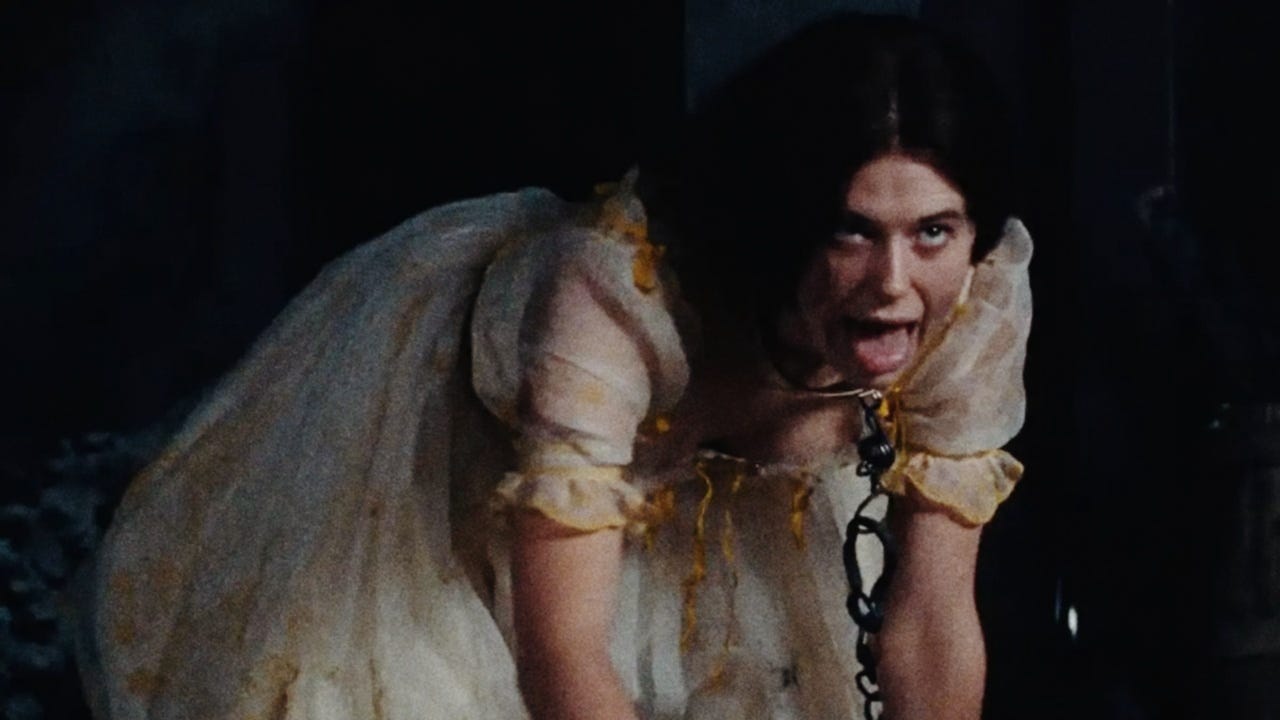
In short, Brontë’s Isabella resists, Fennell’s Isabella stays complicit — at her own will.
And I can’t possibly explain how appalling and revolting does it feel to recount those scenes, analyze them, and dissect them while putting the words on paper.
Rewiring domestic abuse and repackaging it as exploring sexual fantasy is not limited to just distorting one of the greatest literary works — it’s making light of an abuser’s violence and erasing the narrative of the victim’s suffering.
Now, many would question and argue: Can’t filmmakers use their artistic license to show sex, consensual fetishes, and kinks on screen, then? Of course, they can. But not at the cost of appropriating abuse, especially when the source material explicitly highlights the ordeal (and especially when the source material is a “classic” intellectual property like Emily Brontë’s Wuthering Heights). Not at the cost of painting the picture of a victim/survivor in a way that in any way insinuates that they enjoyed being abused, rather than painfully suffering through it. Because when it comes to abuse (domestic or sexual), ethics takes precedence; and as a writer-director working with such sensitive issues — especially a female writer-director — one should be conscious enough about what they’re putting up on screen, and how.
Then comes the distortions and, in extension, the destruction of Brontë’s IP.
Sure, Brontë’s Wuthering Heights isn’t a love story, but calling it “not a romance” is equally flawed. Partly because romance as a genre isn’t restricted to just love stories, and then, the genre itself doesn’t assume the responsibility of *always* portraying the healthy love. A lot of commentary has happened on how Cathy and Heathcliff aren’t star-crossed lovers, but represent what we call today a toxic relationship, where neither party can let go, even though they cannot cohabitate in harmony as well. But Brontë’s Cathy and Heathcliff aren’t lovers who are negotiating affection as partners — they’re constantly trying to navigate selves amidst identity fusion. For Cathy and Heathcliff, both of them are latched to each other rather than having a separate sense of individual selves, and hence, when Cathy says, "Whatever our souls are made of, his and mine are the same" — it’s not just an emotional proclamation of love, it’s a confession where she admits that she doesn’t know how to separate herself from his being.
In modern love, after taking a glance at the model relationships that are touted as healthy, Cathy and Heathcliff’s equation might fit the box of toxic love with an array of attachment and abandonment trauma. But Brontë’s book doesn’t depict them as the epitome of ideal lovers, either. What Brontë does is she presents a psychological flowchart of what course a bond of childhood fondness might take when class, race, and other societal factors broaden the divide between them. Because, essentially, Brontë’s Cathy and Heathcliff aren’t the kind of lovers who are learning proximity as two distinct beings — they’re one soul forced into separation, struggling to belong. It’s a trauma bond put under constant tension. And because there’s such a drastic difference in their class and social standing, even their union isn’t peaceful — it’s so intense that it always births yet another conflict, leading to destruction.
This constant friction is understood better by studying the next generations of Cathy and Heathcliff in Brontë’s book. In the book, Catherine’s death marks only half of the story — the next generation of Lintons, Earnshaws, and Heathcliffs (think younger Cathy Linton, Hindley’s son Hareton, or Heathcliff’s sickly child Linton) carries the story forward, and those strings finally come together to make sense of the multi-generational cycle of revenge and suffering that made Brontë’s novel’s ending so harrowing. The moment you omit all those chapters of spilled consequence, you lose the sense of a cycle of violence that essentially explains the inherited trauma.
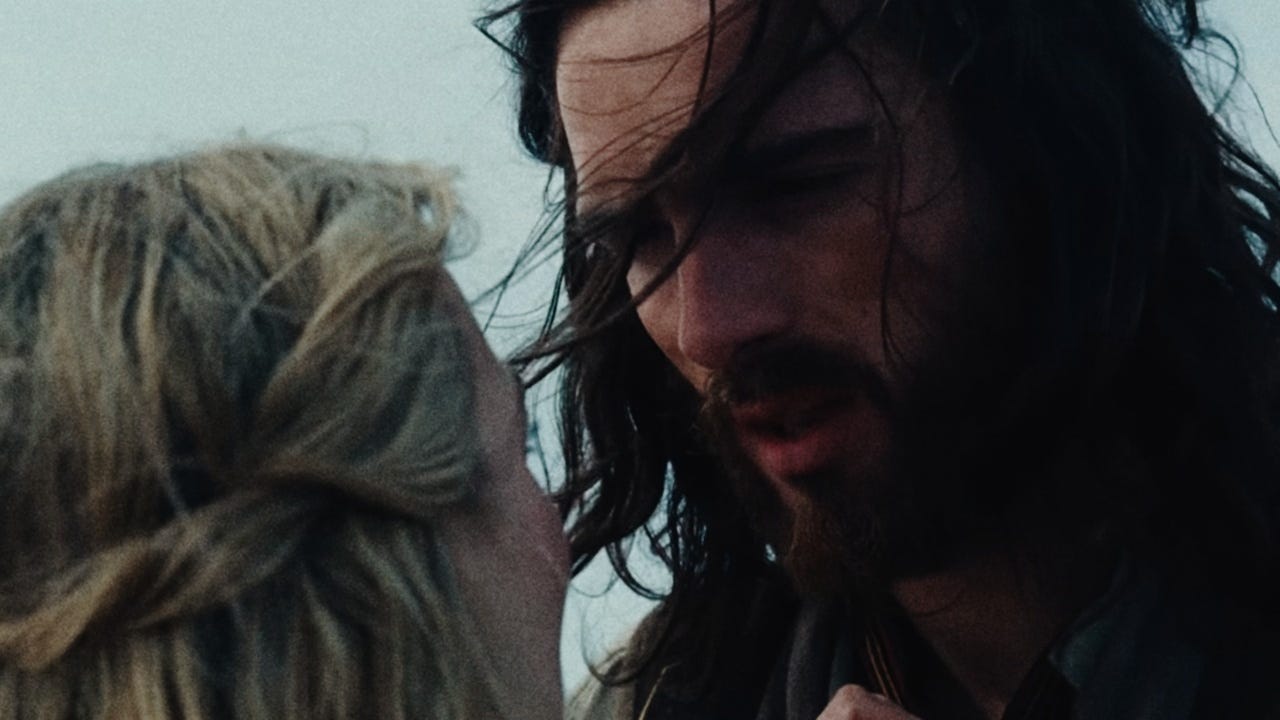
What Fennell does in her version is take sex as her central character, and realign every character around that. Whether it’s Cathy, Heathcliff, Isabella, or even Nelly — Fennell sprinkles bits of sexual fantasy stardust over each of them and tries her best to mold their story into a modern-day erotica. Shame, because even erotica has better plotlines and tropes!
Fennel’s film opens with a soundscape that one might think of as an intimate scene — but when the visuals appear, you see a man being hanged, while bystanders pass on lewd jokes. From the very first scene, Fennell establishes that she’s aiming for shock value and fetishistic thrills rather than anything sensible. On the surface, she positions her Wuthering Heights as a progressive film that doesn’t mind exploring sexual awakening and exploring eroticism, but in reality, she ends up serving half-baked BDSM-coded kinks at best. Even stylistically, Fennell walks in an entirely different dimension from Brontë’s world: the entire tone of the film is vividly postmodern camp that can even put Christian Grey’s playroom to shame.
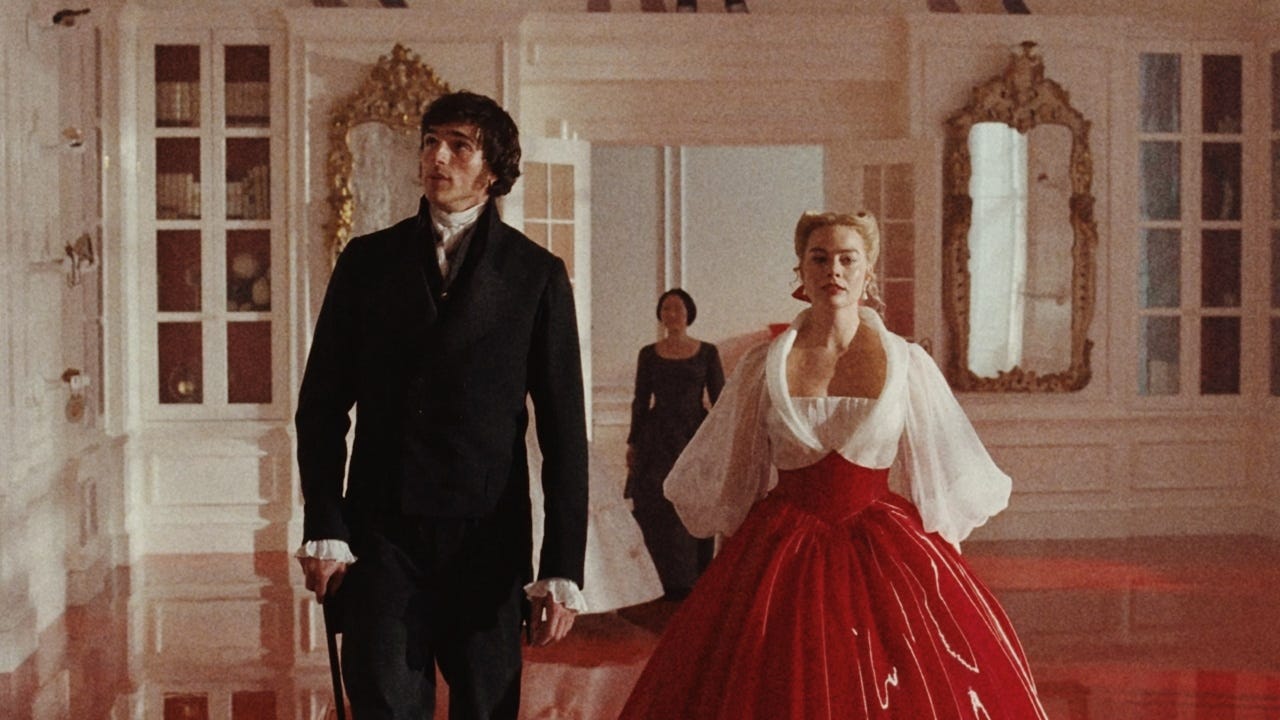
Fennell’s Cathy is overtly done up in plastic ball gowns and exists like a pretty fixture in a hyper-sexual narrative. Sure, Margot Robbie is an actor who doesn’t need commoners’ validation for her craft, but for a Cathy who’s in adolescence and just on the verge of becoming a young adult, neither she nor her screen presence makes sense. As for Jacob Elordi, the Aussie heartthrob who probably earned Heathcliff mostly based on his attractiveness — like his “hotness quotient” and “sex appeal,” and so on — fumbles as Heathcliff; partly because of his appearance, and then because he’s not unhinged enough. In fact, Elordi exhibits so much broody restraint that at one point, it almost felt like he was still not done portraying Frankenstein’s Creature. I have no doubt that Jacob is a talented actor, but I would’ve loved to see men like Dev Patel, Riz Ahmed, or Regé-Jean Page as Heathcliff.
As for the other characters, Alison Oliver as Isabella is stunning — simply stunning. As much as I loathed Fennell’s reinvented Isabella, she created butchering Brontë’s strong woman, Oliver delivers, and how. I was horrified seeing her crawling on all fours with chains around her neck. For Joseph, another character Fennellified, I’d have loved to see more of Ewan Mitchell — he looks promising even without the silver Aemond Targaryen wig.
Three actors I thoroughly enjoyed watching on screen were Charlotte Mellington (young Cathy), Owen Cooper (young Heathcliff), and Vy Nguyen (young Nelly). They had the screentime of barely 10 minutes — but if someone managed to make me happy about watching Wuthering Heights on screen, it’s only them.
Fennell’s Wuthering Heights is not the first distortion of a classic literary work that vehemently restructures a story’s narrative, jamming it into the mold of white supremacy. If today’s socio-political climate is any indication, it won’t be the last. The only form of resistance we have is to not succumb to those adaptations or conform to those versions of stories.
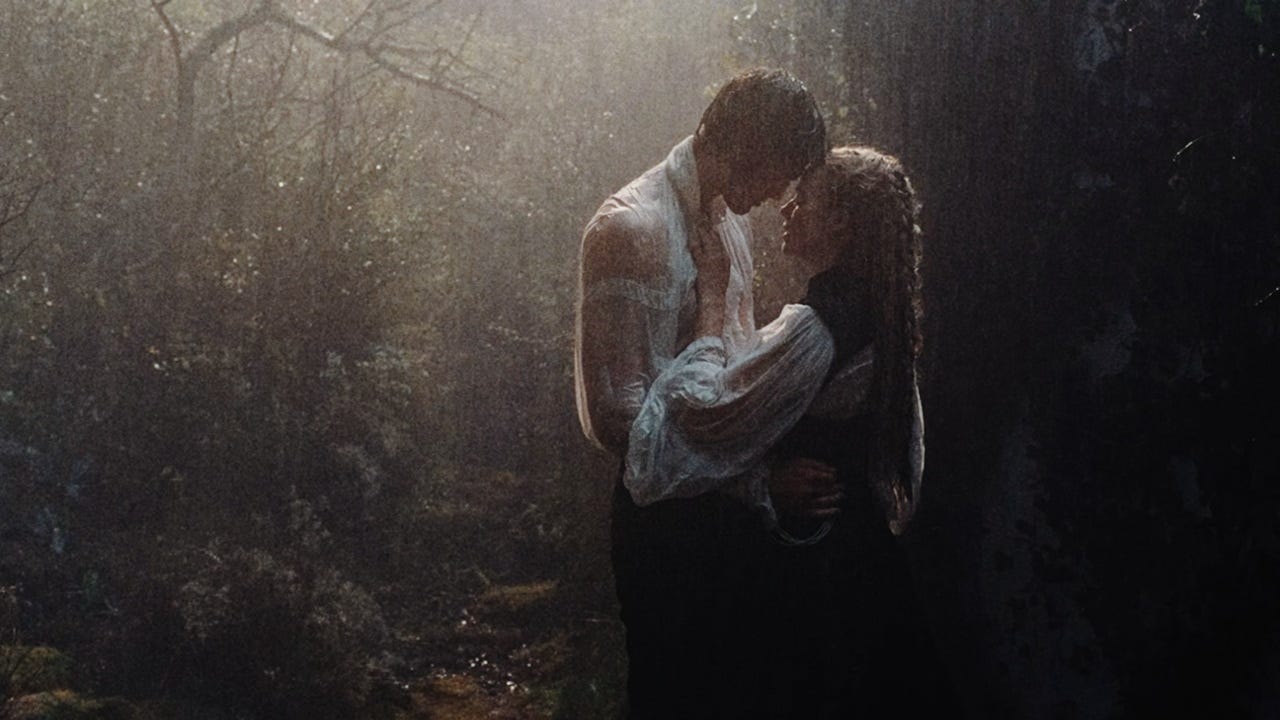
Make no mistake: Brontë’s Heathcliff tells us a story about how racism creates violence. When his racial identity is erased, we effectively erase the role of racism in fuelling his ruthless actions, and in extension, holding it accountable for his violent behavior later on. Removing racial slurs and colonial context, Fennell’s film barely acknowledges Heathcliff’s ethnicity. Not just that, the film explicitly drops any mention of Liverpool’s docks (the preeminent European slave-trading port in the 18th and 19th centuries), where Heathcliff was originally found, and omits Nelly or others describing him as gypsy or a Lascar.
In plain words, the hard truth of racism that Brontë wove into Heathcliff’s story vanishes in Fennell’s version.
And that erasure is no happenstance — it’s a conscious choice, a clear political stance.
Brontë’s Wuthering Heights isn’t a story of tender childhood love growing into something “toxic,” and being derailed into meeting a “tragic fate” due to simple jealousy or revenge — it’s a 19th-century commentary on how racial prejudice, class injustice, and social degradation can come together to contribute to multi-generational trauma and destruction. Fennell’s version takes that throbbing richness and cooks up a 21st-century sensual spectacle made of sheer gowns, tighter corsets, and all kinds of sneaky (and freaky) sex.
Fennell’s film neither reasons with Heathcliff’s monstrosity nor empathizes with Cathy’s madness; it doesn’t even deal with Heathcliff’s grief-laced mania after Cathy’s gruesome death, and the aftermath of the same. Instead, it prioritizes erotic obsession over systemic injustice.
Sure, Fennell is not bound by some oath to not deviate from Brontë’s text or the foundational values of the story written by her. But as an artist using Brontë’s prestige IP’s name and marketing her product as a “version” of her work, Fennell should have a responsibility to live upto its authenticity — that much is owed. Whether she calls it an “adaptation” or her own “version,” as long as she’s using the IP “Wuthering Heights” — as an artist borrowing from another — she must adhere to the core ethics of the subtext of Brontë’s text.
And by virtue of that set of ethics, whitewashing the characters that live through certain experiences (and suffer because of the same) because of their identity (race, color, class, and ethnicity included), is nothing but a blasphemy.
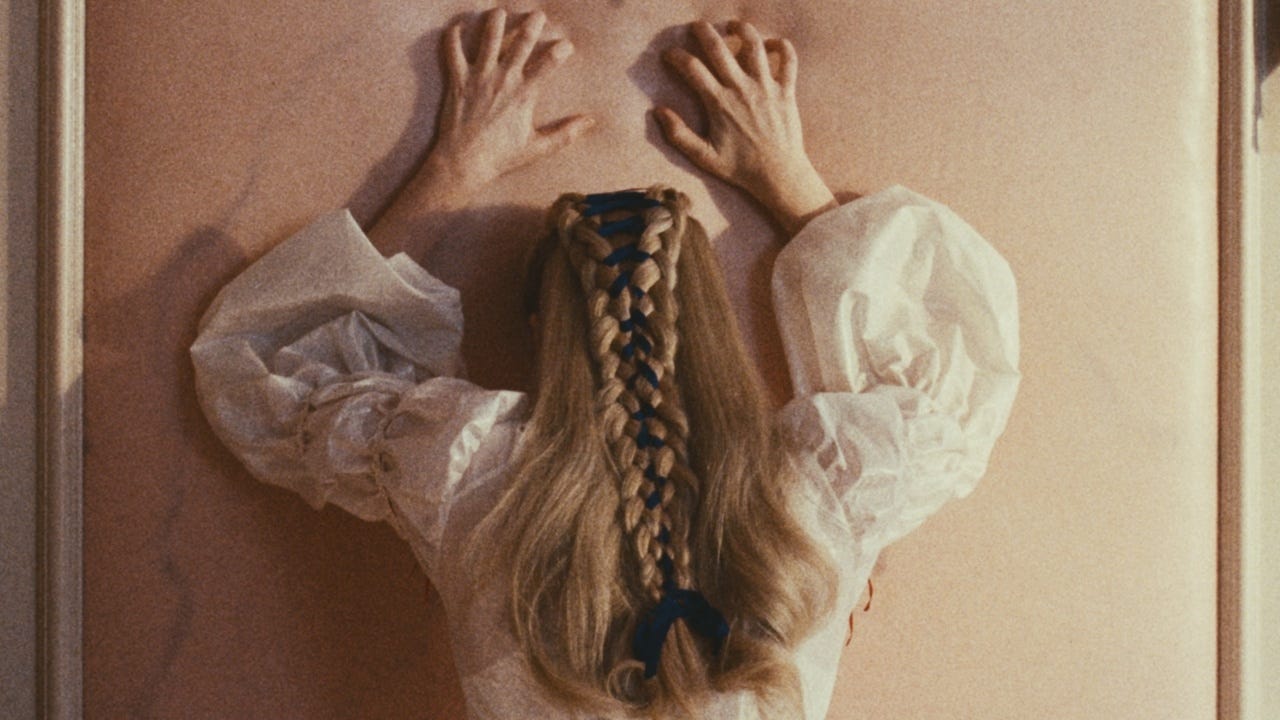
It’s not “artistic liberty" — it’s distorting historical accounts of struggle and survival.
Emerald Fennell might have her white privilege of looking at Wuthering Heights as her own fantasy born of a teenage fever dream, but she sure can’t get away with reimagining it as “the greatest love story of all time” — because in that case, she’d really be damned!