
I was a kid of 20-something when Hannah Gadsby first happened to me. I was staring at the small rectangular screen with watery eyes — a couple of blinks and a little bit of sparkle around the corner — when they said, “Stories hold our cure.”
I was not done wearing my ear-to-ear grin yet, because ‘Nanette’ was still on. But from the bittersweet aching I held dearly in my heart, I knew I had found my favourite genre to spoil myself with — it was traumedy.
A chest full of tragic experiences, pain, and grief; and a room full of laughter that comes out of a Pandora’s box to pacify the blow. Traumedy, for me, became the stories that stemmed from some kind of hurt that was harder to process; hence, we came up with coping mechanisms that rather made space for joy, and the lightness of being!
I wish I could say that ‘The Bear’ was just another show about food, restaurants, the people who work in them, their struggle and journey — something like a fictional spin on MasterChef-like reality shows. I wish I could watch the show as though it existed on some fictitious plane — so it was not “that deep.”
But it was — it has always been “that deep.”
For the past five years, ‘The Bear’ has been the lightsaber that kept me sane at my most unnerving hours — sometimes, like a mirror that recognised the chaos inside and made me feel seen; sometimes like a parameter that helped me measure how far I had come away from that mess (and how far I still have left to go).
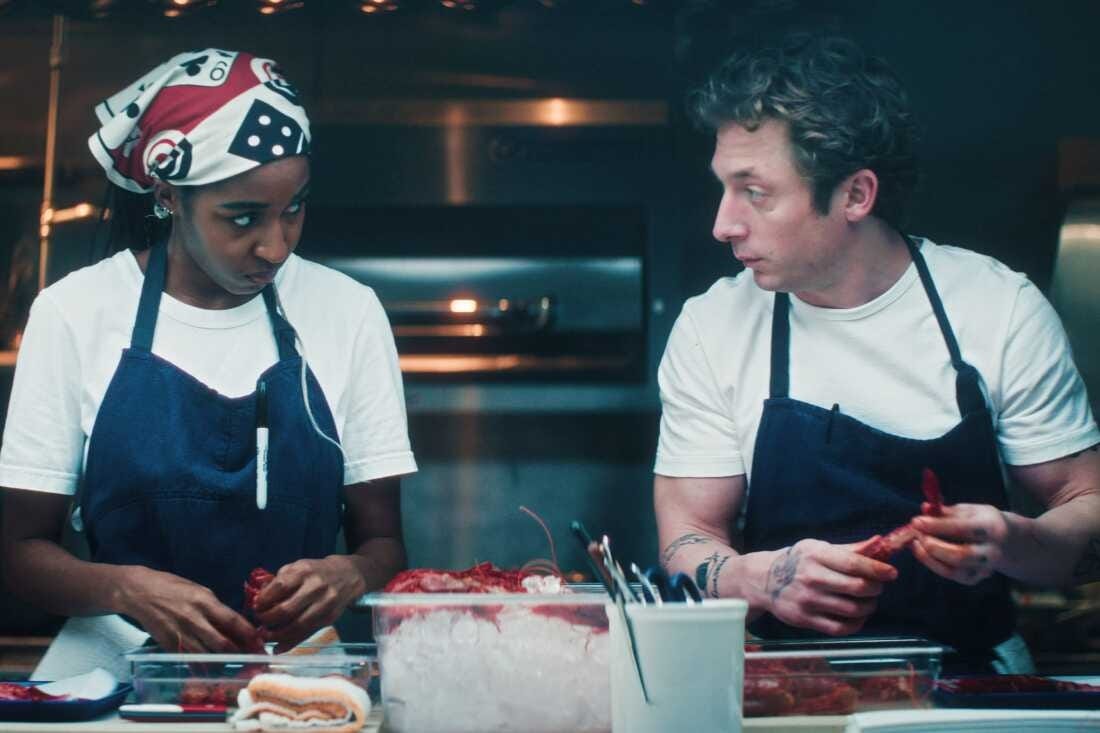
Now that the lights are out (just on the series after five fabulous seasons, not in the restaurant — relax!), the retrospection part comes due.
[Also, this might be a good time to mention that this piece may contain spoilers. So, proceed as you see fit.]
Remember how ‘The Bear’ started?
With an almost impossible dream, followed by a jumpstart when the alarm went off!
Then came the food — as enticing as it looked on screen, the making of it was no less so. Unresolved grief provided the motivation; misplaced anger became its main ingredient; memories of a traumatic past decided its flavour profile. While dysfunction served as the seasoning, chaos came to be the final garnish. All that rigorous mess that essentially became an integral part of the journey of the food — from the kitchen to the table — reflected what it was missing and compensating for: a whole heart and the simple joy of enjoying a meal with loved ones.
That precisely was the point of the show, from the very beginning. Sure, food was the thematic language of the show; the restaurants, the fine dining (and/or F&B), as well as the hospitality industry, lent the overall architecture. But at the heart of the show stood an enormous amount of grief; and a desperate attempt to fine-tune a language that was trying hard to communicate the same: “Where does it hurt?”
When Carmy (Carmen Berzatto, played by Jeremy Allen White) confessed to Sugar (Natalie Berzatto, played by Abigail ‘Abby’ Elliott) why he never asked her how she was feeling, saying, “... I can’t describe how I’m feeling. So, to ask somebody else how they’re feeling… that just seems… I don’t know, insane,” he was not just voicing his inability to process the trauma his life had accumulated so far, especially after his brother Mikey’s (Michael Berzatto, played by Jon Bernthal) death — he was telling his sister, honestly, how all-consuming the grief had become, so much so that it made him feel empty inside.
That emptiness was even heavier to carry within, because Carmy was navigating the sneaky alleyways of grief after losing someone whose presence mattered to him the most, and whose approval he hopelessly pined for throughout his whole life. Mikey’s death devastated him; crushed him; guilt-tripped him so deeply that his reflexive response to that grief was to punish himself — to burn his hand to numb the pain — instead of coming to terms with it. He was angry, he was hurt, and he was in denial.
But more than anything, it puzzled him the most when his brother left him ‘The Beef’. Because even though Mikey cared deeply for Carmy, enough to leave their family restaurant to none but his little brother (not even to his best friend), he could not figure out a viable way to express or convey those feelings to him. He would show off his brother’s achievements to strangers, celebrate his professional milestones with them; but when it came to keeping in touch with him — he would fold.
Carmy felt “trapped” between grief and guilt, because he did not know how to honour the remnants of his dead brother. On one hand, he wanted to make him proud; on the other, he did not know how to stop the wound from hurting — from bleeding himself dry and spilling that blood on every possible relationship. Despite his unprocessed trauma, unresolved grief, and bottled-up anger, he had vowed to “fix” The Beef; because he thought that was what was left of Mikey for him — the bridge between two estranged brothers.
So when Carmy came back to his roots — the city of Chicago that held both his agony and joy — after earning accolades from all over the world with his talent and skills, he did not just carry the baggage of his own expectation of brilliance; he carried the scars that the “hustle” and the pursuit of that brilliance rewarded him with.
All those scars piled up, and the rupture translated to frequent screams. The pain he could not process became the punches he let loose on others. The more he wanted to prove himself, the more he suffered. Everyone around him had to learn the ropes of surviving him, and the toxic work environment he created with his problematic behavioural traits.
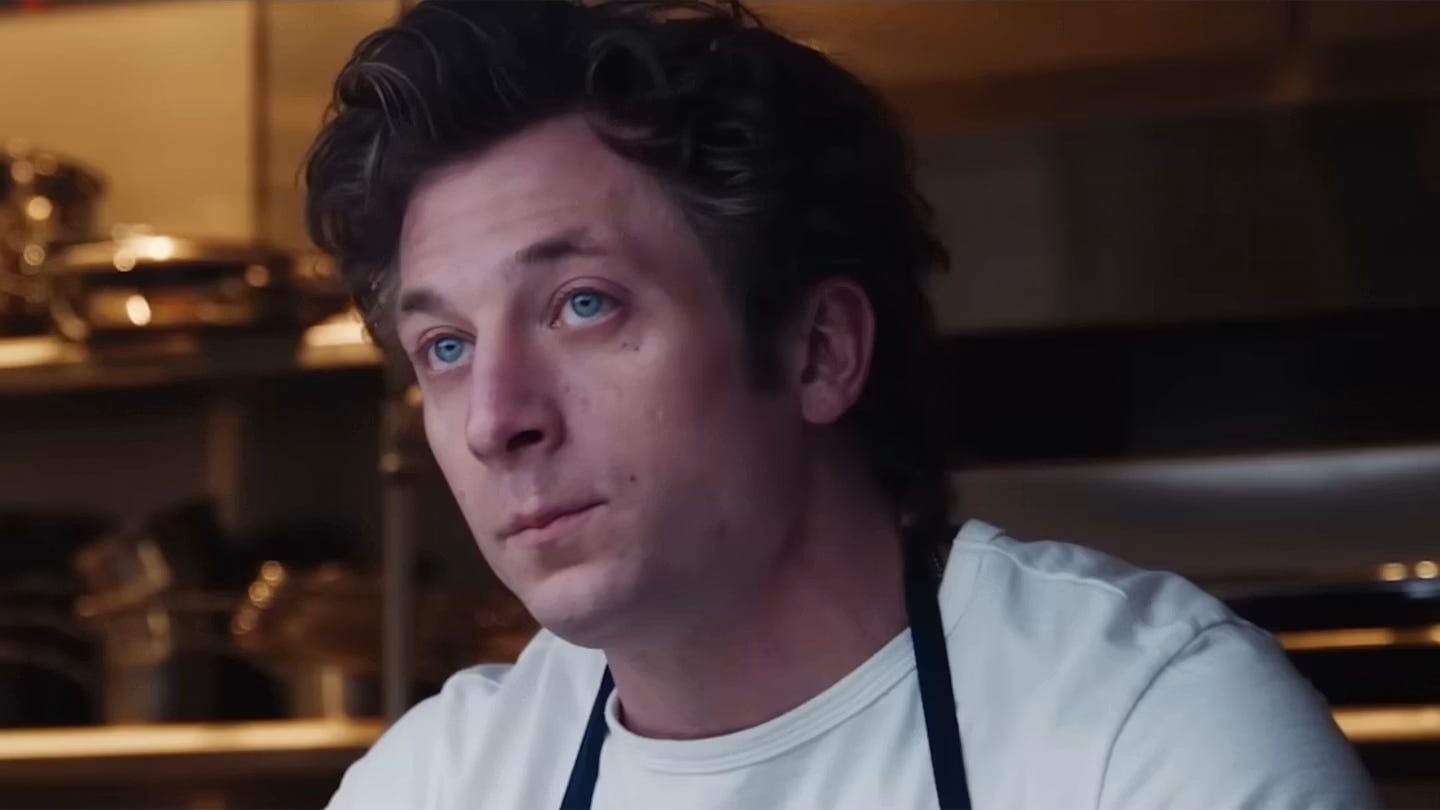
Carmy’s tragedy was that he mistook hustle for healing. He thought if he could build a restaurant from the ground up, make it function and flourish flawlessly, and ultimately earn the validation of the much-coveted Michelin star — that “win” would compensate for his loss, and make it feel less heartbreaking. He was under the impression that he could avoid the ringing presence of grief altogether if he could fill every waking hour of his existence with the chaos of the kitchen — without realising that the only way was through.
That was the ultimate CP (Carmy Problem, for the muggles) — that the illusion of control could cloak the fear of collapse. His relentless chase for perfectionism made up for his impending nervous breakdowns lurking just around the corner. When he micromanaged, he did it because he learnt leadership through fear. The top restaurants and the top chefs taught him world-class culinary skills, trained him to strive for almost impossible standards. Their tenacity taught him techniques people envied. But some of them pushed him so hard against the wall that their bullying instilled this stubborn belief in him that he had to break himself to make it.
Even though he believed his job to be an act of service, Carmy operated from a place where the only currency was the compulsion to prove his worth so that he could stay afloat above his insecurities. The urgency was more about not allowing any real time for any human feeling to sink in, rather than keeping up with the demanding pace of a busy kitchen.
It was only after watching Syd (Sydney Adamu, played by Ayo Edebiri) navigate a busy kitchen space with precision without the cats-and-dogs-like viciousness (remember the pasta dish Syd made in under 3 minutes?) that it dawned upon Carmy that maybe efficiency did not need to come with ferocious aggression — brilliance and brutality, especially bullying, did not need to share an obligatory brotherhood.
Every time Carmy staggered or collapsed, broke down, and all hell broke loose in the kitchen — Syd stepped up, held it together, and took the wheel (with safety belts on). When she signed up for staging at The Beef, she was a young aspiring chef who was in awe of Carmy’s talent, creativity, and passion for food. By the time she was hired at the Berzatto family joint, with the Italian Beef Sandwich as its speciality, she already knew: Carmy was “an excellent chef,” but he was also “a piece of shit.”
Syd could have walked away from all that chaos, all those conflicts, and everything that made her more anxious than the usual rush of the kitchen culture did. She, in fact, did walk away from that dysfunction — what brought her back was a shared vision, a bigger dream.
As a young chef with experience in catering gigs and a hunger to prove that she was not done just because that business did not work out, Syd came along with a childlike enthusiasm. She never shied away from learning from the best (that’s Carm, in case you missed his picture as a James Beard winner), and she also wanted to show him that she had chops, too.
Despite the microaggressions she initially faced in the kitchen led by Carmy (remember when he called her “impatient”?), Syd did not let those encounters harden her or make her bitter — the way they had for him. As a young chef in charge, she led with compassion, collaboration, and inclusion. Watching Syd handle the demanding pressure of the kitchen and treat the crew with kindness and respect made him realise that an alternate way to excellence could indeed exist — away from the beaten path of bullying, bickering, and breakdowns.

Syd had honed her skills — both culinary and leadership — to such a level that the dish that Carmy once put aside due to its “not perfect yet” status ultimately became the saving grace for The Bear, at the 11th hour.
For Carmy, The Beef (later, The Bear) was his responsibility — his relentless obsession with “fixing” what his brother trusted him with turned it into a burden. For Syd, The Bear was her long-nurtured dream — a workplace she sought to build with her vision, where empathy and excellence would go hand in hand. The former came with exhaustion as the fuel. The latter brought along sensibility as the currency.
Every time that fuel triggered a fire (sometimes, literally), Syd’s leadership worked like a failsafe fire suppression system. When the mounting pressure of achieving excellence took over Carmy’s mental stability, it was Syd who kept the on-the-verge-of-sinking ship steady and steered it away from drowning in sure failure. And throughout it all — through the moments of doubt, dread, despair, and panic — she did not abandon her core values that made him a more humane yet fitting and effective leader.
Carmy did not sugarcoat it when he told Syd, “I couldn’t do it without you. I wouldn’t even wanna do it without you. You know, you make me better at this.”
When Carmy professed to Syd: “You’re everything I’m never gonna be. You are considerate. You allow yourself to feel things, right? You allow yourself to care. You are a natural leader and teacher. And you’re doing all this stuff for every right f-cking reason,” he was not just boosting her morale for the tricky road ahead — he finally came to terms with his own limitations and shortcomings that made The Bear’s journey more challenging and rockier.
Think all those conspiracy theories about a Syd-Carmy romance did not make sense?
Wait till you see them hugging it out while the warm yellow sunlight comes in like komorebi through the concrete jungle, bathes them in the shared joy of finally touching the “star”ry milestone after so many trials and tribulations!

Do they turn into lovers, in the end?
Love is too tiny a term to suffice for what they have together!
It takes me back to the night Carmy meant every word of what he said: “Any chance of any good in this building—it started when you walked in, and any possibility of it surviving, it’s with you… You’re The Bear.”
Syd’s journey — from a hard worker to a visionary leader who was assertive and compassionate in her saying, “I don’t listen to the world. I listen to my crew” — not only elevated her and unlocked her true potential as she took the helm of The Bear as the “captain” (big hug to Sug for that moment). By the end of the rocky road, it was because of her that Carmy became a more accountable individual — less of a *jerk* and a more accommodating team player.
And while Syd was the helping hand Carmy had inside the kitchen, Richie (Richard “Cousin” Jerimovich, played by Ebon Moss-Bachrach) subbed for a friend, a brother, a cousin — all in one — outside of it, guiding Carmy to understand the team game.
If I had to pick one person who held the show together as the thudding, breaking, yet beating heart of the entire series, it would be Richie — in a heartbeat! The Bear started with Richie being a man so riddled with grief over losing his best mate, his brother, his cousin — altogether, when Mikey shot himself — that he was left with a giant hollow in his heart. He didn’t just lose his purpose when he lost Mikey; the grief came along and left his personal life and family in disarray. His marriage took the hit; his fatherhood was tumbling; he was left feeling redundant everywhere — especially at work. Especially at The Beef, the Berzatto family joint he considered ‘home’ despite not being a Berzatto by blood — the “one f-cking perfect restaurant” with no stars, where Richie felt “less alone”, and everybody felt “alive.”
After Mikey’s death, the more hopeless he felt inside, the louder his antics became — almost to the point of compensating for the void within. Richie’s recklessness was not orchestrated to seek attention — it was a cry for help from someone who could not see the shoreline while drowning in his grief.
But man oh man! The minute an anchor was extended, he found his compass again — it came in the shape of Forks. Richie did not believe in lifeboats anymore; every morning he wore his armour — not just to conquer yet another fight the universe was putting forth, but to feel good about himself while doing so.
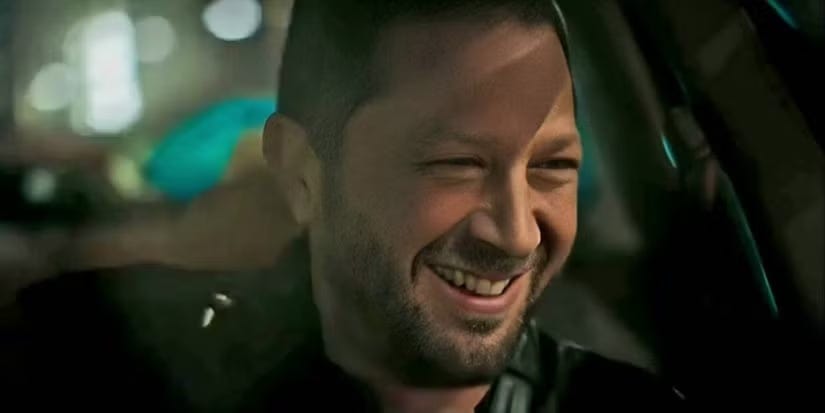
From being a sack of self-pity, Richie became the manager-in-charge of lifting every single person’s mood and morale — especially when the going got tough. From napkin-testing to find out one’s true potential to helping a supposedly “stupid” Fak arrive at self-belief and confidence — Richie truly was “the sand” — the synergy that bound everyone together.
He was the ally Syd relied on, even though the duo had a “sharp” start where the latter literally stabbed the former. He was the one point of contact that made Sug’s life a little less difficult, especially during her maternity period — because even though he did spend a ridiculous amount of money on floral arrangements, he was the dependable general she could count on.
For the Faks, Richie was their guardian angel who helped them crack the code of professionalism, especially at a fancy fine-dining place. And yet, nothing dimmed the spark that made him an infallible source of comic relief; a partner in all sorts of surprises and whimsies.
And for Carmy, he was a mirror that held him in his highest regard and revealed the cracks still. The reason Carmy and Richie were so cross with each other and were in conflict so frequently was because they were navigating their way around a similar kind of loss — one they could still feel in their bones. Essentially, Richie was a brother to Carmy — the “cousin” — the only shareholder in the same wound. They just dealt with the aftermath differently. While Richie clung to what helped him stay afloat, Carmy pushed it all away, isolating himself more.
When Richie and Carmy created a ruckus, everyone felt the tremors of it. When they were at opposite ends of the spectrum — which was more often than not — everyone had to put up with the brunt of that tension. But despite all that friction, those fights, endless swearing, and cursing at each other, and even withstanding the “refrigerator syndrome,” the cousins eventually found their way back to each other. And sure as hell, Richie became the testament to the idea that sometimes, bonds beyond the “family” run as deep as the blood. Chosen family sometimes only gets stronger through tests and trials.
When Richie said before their dinner service on the day the city of Chicago was under the blisters of pouring rain, and The Bear had run out of the clock as well as money, “If we’re gonna invite people into our home, we are gonna look like a f-cking family,” it was not just him lighting a fire so that they could power through. He truly was the one who retained the “family” value of The Beef; who made sure that everyone felt at home even at the fancy fine-dining restaurant that The Bear intended to be.
Richie brought the sense of belonging to that house; Sugar enforced the rules. She justified her name, going above and beyond for people she knew only for months. She shouldered all the adult responsibilities while growing a little human inside her. Even before Richie found his purpose hanging by the forks, and Carmy was still “non-negotiable” at being Carmy, Sug was the one holding the fort along with Syd.

She refused to learn her lesson after “co-signing for a drug addict,” kept putting effort into ensuring her other brother’s well-being after one shot himself — all while managing her own grief AND preparing to step into a very important chapter in her life. Carmy was constantly messing things up trying to protect his family’s and his dead brother’s legacy; Sugar was doing the same, but with much more grace.
She was the pacifier for Carmy whenever he was on thin ice with the family drama (and trauma); and yet, she stood firm on her own ground to protect her sanity, too. Doing it all while embarking on motherhood, and mending her fractured relationship with her own mother in between — Sugar healed something in me that only a daughter surviving a complicated mother-daughter relationship would be able to fathom.
That is possibly the best part about ‘The Bear’.
Of all the things the show did — it triggered me, pushed me back to my turbulent childhood, made me panic and lose breath, made me reassess and realign my relationship with my sibling, helped me recognise my own problematic patterns, and left my heart on the floor to sweep off just like Ebra said. It made me feel an array of emotions vividly, sometimes violently even.
All those episodes of revisiting trauma, confronting it with courage, even if it was borrowed from comrades, bearing witness to them finally learning kindness — to self and to others — while holding a cleaver in one hand, and their heart in the other… they were just pointing to one sobering truth: just because you endured pain to survive your past, that does not mean you cannot allow yourself to make peace with yourself for a relatively calmer future. You do not need to wither away in order to “win” the love and approval of people — the right ones will accept you with all your flaws and help you get better.
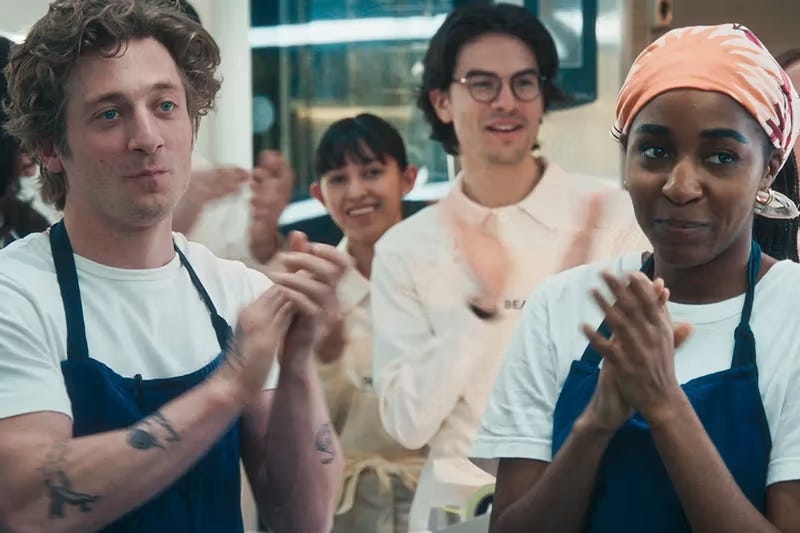
The show dished out all these life lessons over food — a plate that is supposed to sustain you; a plate that sometimes becomes the sole purpose of someone’s survival. And boy, did it make the meal wholesome!
Tina’s struggle to make the pasta under 3 minutes, then inventing a dish with Brussels sprouts as the star and turning it into a “family meal,” was proof that it is never too late to pursue your passion. Nor is it too late to learn new skills that eventually help you prepare for the next chapter in life you were always chasing.
Marcus’ unwavering determination to make the best out of his creativity, even through the most rattling periods sometimes, was nothing short of a masterclass in quiet hustle. He did not yell; he did not make a ruckus; he kept perfecting the skills that not only earned him a personal accolade as prestigious as the Food & Wine Best New Chef award, but also saved the day when The Bear was running low on food! One of the reasons Carmy was so in awe of Marcus was because he was the walking example before him that demonstrated that a chef’s path can be steady rather than frantic.
Perhaps that has been one of the most powerful themes of ‘The Bear’ throughout its run — it looks right in the eye of the conventional “grind culture” of the fine dining (and/or F&B) industry, and says that an alternate path to achieving excellence is not only possible, but is the need of the hour.
For years, chefs of the fine dining industry have acted like tyrants — even on camera — with knives in their hands instead of swords. Watching Gordon Ramsay shouting at the top of his lungs on reality shows (so much so that he became a meme, the butt of the screaming joke, and a genre of that specific kind of dressing down) has always been taxing. One, I suppose, would shudder imagining how he might treat the employees in his restaurants. And then there are the stories of Noma that came out earlier this year.
After the New York Times did a piece on Copenhagen’s celebrated restaurant, it revealed how chef René Redzepi “hit, jabbed and shoved workers” and “punched them when enraged”, even jabbed cooks under the counter during service. These incidents of abuse took place between 2009–2017 — throughout almost a decade. Multiple immigrant cooks reportedly suffered threats, intimidation, and public humiliation. Several people (guests, even) came out with their own Noma tales that left them in shock and with a bitter taste in their mouths — irrespective of their celebrated food and reputation. Some former Noma employees even admitted how the world-renowned restaurant destroyed their passion for the industry altogether.
Chef René Redzepi, who has long been revered as one of the top chefs in the world, came out with a public apology recounting the “kitchen culture” he was brought up in and eventually carried into Noma: “When I first started cooking, I worked in kitchens where shouting, humiliation, and fear were simply part of the culture,” adding, “I remember standing there as a young cook thinking that if I ever had my own kitchen one day, I would never lead like that.”
But as Noma opened and quickly became the much-coveted oyster of the culinary industry everyone wanted to have a taste of, Redzepi confessed — “the pressure began to grow; I found myself becoming the kind of chef I had once promised myself I would never be.”
He admitted, “it should never justify losing my temper,” and that he “was not able to handle the pressure, small mistakes could feel enormous to me, and I reacted in ways that I regret deeply today.” He announced that he was stepping back and was “still learning better ways to manage my anger.”
I have seen some video footage of how Redzepi behaved inside the kitchen space, and it could not be any more bone-chilling. The only images that appeared before me were from the episodes of ‘The Bear’, where Carmy was getting flashbacks to his time at Empire — where he was bullied and abused relentlessly — where his mental health was reduced to hollow words over something as trivial as some scallop dish.
In a way, ‘The Bear’ is not *just* a work of fiction — it really is a reflection of how the fine-dining industry has always functioned.
By the time ‘The Bear’ arrived at its last two seasons, we had already witnessed the consequences of pathological abuse for the sake of earning excellence. Carmy was brought up in a toxic culture that sanitises toxicity in kitchens and calls it a fair price for attaining greatness. What is even more jolting is that Noma was one of those restaurants he was trained in — Redzepi was even featured in an episode for a split second. Although, in the show, Carmy was not shown going through any sort of conflict while working at Noma (rather, his creativity flourished there), and his old kitchen pal Luca (played by Will Poulter) was still working as a pastry chef in the same institution that had a much quieter kitchen than what Carmy had carved out in The Bear — turns out, the actual reality of Noma was quite the opposite.
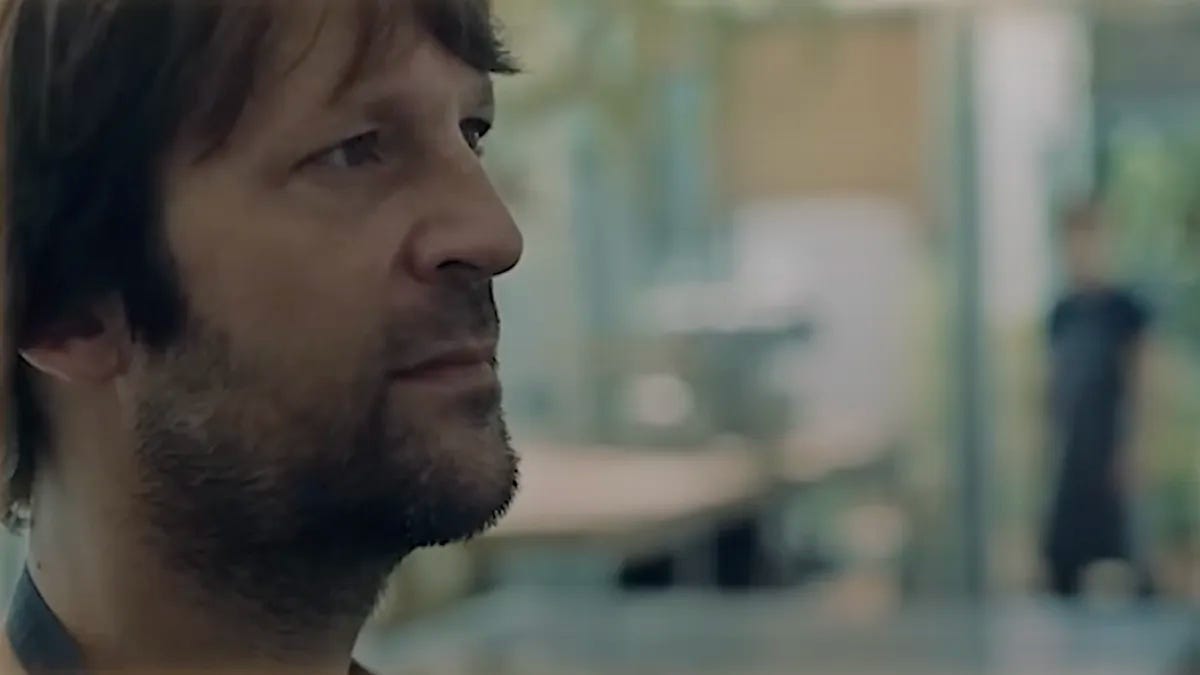
For what it is worth, after the Noma controversy came out in the open, ‘The Bear’ refused to associate itself with the restaurant anymore. Even when Luca, on the show, decided to go back to Copenhagen, the show did not explicitly mention that he was going back to Noma after all. Moreover, the Christopher Storer show clearly aligns itself against the kitchen culture of abuse. Although it is a show that frequently navigates trauma, chaos, and abuse, never for once did it glamourise that inhuman grind. Rather than celebrating ruthless chefs and a dysfunctional work environment, it rewarded a much healthier and more sustainable workplace and leadership with compassion — one that was built on the foundation of empathy and was still capable of achieving excellence and all that Michelin-starry success.
Even though it started with one of the world’s best chefs who retained (not earned) Michelin stars, the show’s gradual progression established a healthy, happy, functional, and motivated team as the real star — one that thrived on mutual respect and kindness, and brought the best out of each other. Even in the face of adversity, that team did not resort to tearing each other apart; they collaborated rather than competing with one another, and treated a meal as an experience rather than just a mere outcome of slogging in the kitchen for hours.
Personally, ‘The Bear’s final season feels deeply cathartic because it feels like a heartfelt homage to Anthony Bourdain — my favourite Michelin star if that star were to be personified. The man who saw food as not just a means of survival, sustenance, or some ladder to success — but as a universal language that has the capacity to be the relic of shared humanity. Bourdain’s idea of a hearty meal was eating together, swapping cultures, sharing history, and eventually bridging the gap between communities. He was no stranger to fame and success, and yet — he valued simple, authentic, and honest meals in plastic bowls from local joints rather than the herbed hullabaloo served in fancy dinnerware at uber-expensive restaurants. To him, the best table was the one where the chosen family came and dined together.
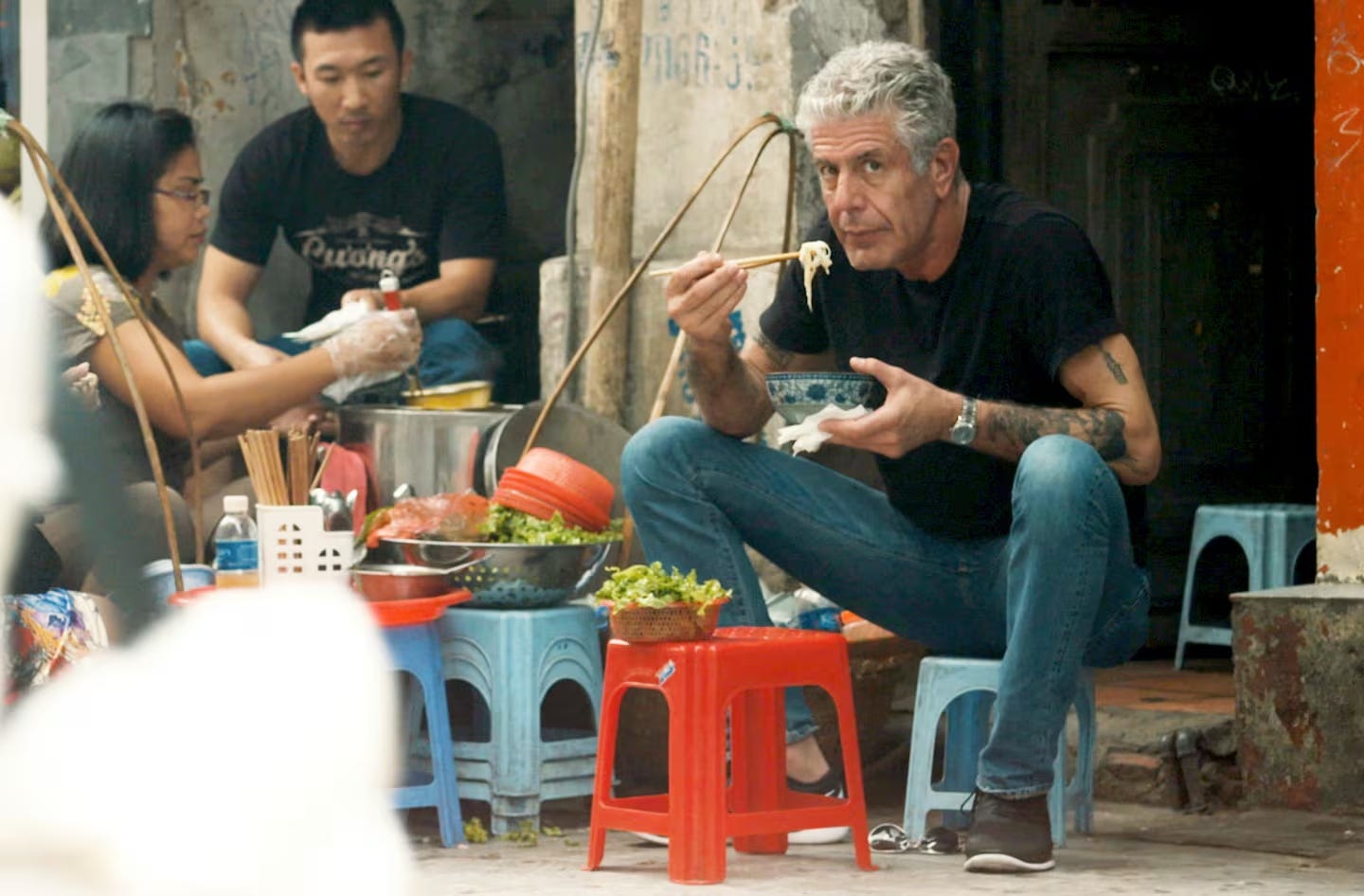
Bourdain truly believed that sharing a meal was the best way to understand and connect with different people hailing from different cultures. He loved local street food more than cuisines garnished with truffles; preferred greasy spoons over a whole set of fancy cutlery. To him, the perfect meal was earthy, fresh, and made with love.
Bourdain wrote about the real, gritty side of food. He travelled the world in pursuit of that. He was more interested in the people who made the food, in their stories, and what shaped their taste and culture. And my god, did he care about the heart and the hand that cooked and served the food!
It felt so gratifying to see how ‘The Bear’ ultimately resorted to Bourdain’s recipe to serve the show’s final meal. It was not some fancy thingy like Foie Gras; rather, something as simple as cola-braised short ribs made the final course as delectable as it was wholesome!
Sure, The Bear did not suddenly bounce back to seeing lucrative profits — it was still making just enough to make ends meet. But it did earn the stars (yes, two stars) for a hearty meal where the warmth of the hospitality and kindness topped brutal and cold techniques.
‘The Bear’ hustled and made every second count — yes. But even more than that, it made me believe in second chances in life — to find one’s true passion, to cultivate it without striking a bargain with sanity, and to finally arrive at peace.
What could have been a better tribute to Tony than that?