
"এত মিটিং-মিছিল করে কী হবে?"
For those of us who grew up as millennials, this question doesn’t come as a surprise. Our mothers asked this every time we wrote posters and painted placards. Our fathers got worried when we stayed out on the streets until midnight—sometimes, well past it. Uncles thought it was their job to freak our parents out more: “Why did you ‘allow’ this in the first place?” Neighbors branded us troublemakers.
One could call it privilege; I count it as my inheritance that I come from a household that believed in beginning political education as early as learning “আজ মঙ্গলবার। পাড়ার জঙ্গল সাফ করবার দিন।” I was barely 6 when I walked my first rally. I wasn’t even 18 when we had the police thrashing us at a protest march.
Fortunately, the cynical Boomers and overtly practical Gen Xers I had around me while growing up didn’t bar me from dreaming of a better future for our country, our people, and generations to come, despite those bruises.
So we marched on. We rallied behind the ideologies we believed in. We understood that solidarity had to transcend social media and extend to the streets. And even with all that, we learned to pose questions instead of pledging blind loyalty in the name of good faith.
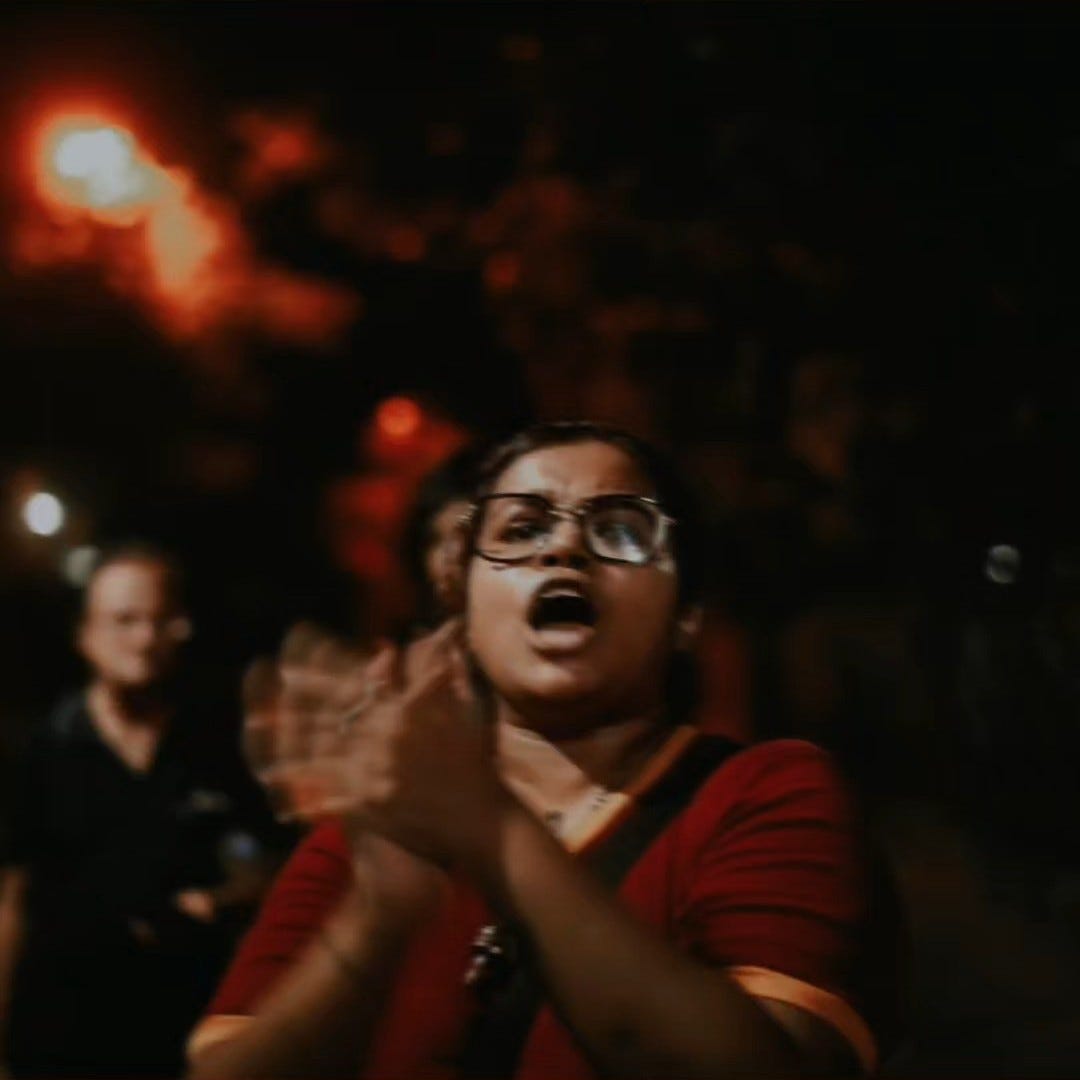
The CJP campaign is no different. The nationwide uproar that they “led” has enjoyed support from the masses, which essentially paved the path to their “victory.”
Now that they’re busy celebrating, regrouping, recuperating, or whatever, while the masses are wondering “what now” and minorities are facing either harassment, charges, or even worse, this is the time to ask questions, to demand the same thing they’ve been demanding from the government: accountability.
Who decides who can call off a “nationwide” protest?
Is it the leadership who merely started it, or is it the people who sustained it for over a month? Is it the leadership who had the luxury of staying on the stage and not at the forefront of the Chalo Sansad march that faced brute force from the police? Or is it the people who traveled to Jantar Mantar from all over the country, with nothing but a tiffin box filled with mungfali and achaar, or a bag full of first-aid items, and took the lathis?
The usual argument goes like this: a demonstration cannot go on indefinitely. But who gets to decide if it can suddenly be withdrawn without any notice or discussion with those who have a stake in it? That too, even before all the demands were met. Or was the leadership the only stakeholder here? What about those who sacrificed days of their lives and livelihoods, risked their safety and careers, left their homes and families, spent their hard-earned money—without being funded or seeking reimbursement—to simply partake in the protest, to show up for the cause with no agenda of their own? What would it take for the leadership to show them basic gratitude and dignity?
What about minorities?
It’s the usual course of how it goes under the M0d1 rule. Time and again, regardless of who leads a protest, minority communities end up bearing the brunt of the state’s repression and its various forms of violence. Junaid Bhai and his family had to go through multiple tiers of harassment from the state because he chose to feed the students and those who turned up at the demonstration. His bill came due simply because he chose humanity and solidarity—nothing unconstitutional—over the state’s machinery of cruelty.
His case is not an isolated incident. This crackdown is a systemic pattern and a familiar one. Several states are following in Delhi and Uttar Pradesh’s footsteps. Assam, West Bengal, and Bihar have already done it. How long until the other states follow suit?
CJP listed this among its three demands, where it sought assurance that no action would be taken against the student protesters across the country. Why did the demonstration “end” before that assurance was secured?
And what about those who’ve been the victims of police brutality during the protest? Those who cannot afford medical assistance? After all, recovery takes time, money, and support—resources that many protesters simply do not have. How do they bounce back to “normalcy”?
What about the bigger picture—the greater cause?
When a stone is thrown into a pond, the ripples don’t remain confined to just that stone’s corner. Likewise, a protest may stem from a particular issue or two. But when people from different walks of life join hands and come under the same umbrella, the movement becomes bigger than the initial trigger. Fighting against a rogue regime that packs corruption, greed, fraud, and cunning at every level of the administration cannot thrive in a vacuum. One Dharmendra Pradhan goes, another Pralhad Joshi takes his place. What do we expect from the new Education Minister of India, whose brother (along with associates) has been accused in an alleged ₹2–2.5 crore scam? What do we expect from the new Education Minister who has publicly defended the release of the 11 convicts in the Bilkis Bano gang rape case? It’s all part of the same puzzle—the same rotten regime. It’s just a different piece with similar traits.
How do we revitalize a system without a whole regime change? What’s next?
Then there’s the Delhi Police. What about their lathi charge on the protesters? Tear-gassing them? Using shock batons and nail batons on students? What about holding the Home Minister accountable for such crude and uncalled-for brutality directed at a peaceful protest?
What’s this obsession with apoliticalness and itch about Azaadi?
This is where it gets seriously infuriating. Everything is political, kids—EVERYTHING! Education is no exception. You might imagine a child in a school and think: “Well, how can that be political?” But that child being able to have that school, a certain quality and level of education, is political. Their parents being able to afford it is political. Not having access to that is political. Education is not a privilege to be earned. It’s a citizen’s fundamental right. One shouldn’t have to go broke or take out a mortgage to afford quality education. Policymakers must ensure that. Who gets to be or closely work with a policymaker? A politician? Who, again? A politician. Can we put 2 and 2 together now? Or should I explain more?
Also, what’s this chronic panic over the Azaadi slogans? What’s this foolish tendency to narrow the view to the point of linearity where Azaadi can mean one thing and one thing only: independence from the British Raj? Are we not bogged down by another fascist force as rulers in a supposed democracy? Do we not seek and fight for freedom from such treachery, such atrocities, and such vehement violation of the very fabric of democracy? Can we at least attempt to learn and understand the history behind the slogans before disallowing them while categorically sanitizing spontaneous protests?
What’s wrong with our memory?
This is probably the most heartbreaking part of all, where we keep forgetting those whose bravery and courage our dissent is built upon. Memory may be a fickle thing, but if used right—it’s a tool with untapped potential.
History isn't mere study material. It's a roadmap. A reliable guide. The directions are tried and tested. The consequences are well documented. Every win carries some compromises and settlements. Every loss leaves behind some timeless wisdom. When we overlook the cracks instead of sealing the leaks, we repeat history at our own risk.
That’s why we must remember those who came before us, who lit the way so that we can warm up the ground of revolution. Keep in mind, revolution isn’t a one-act play that wraps up at the curtain fall; it’s a continuous flow of one dissent after another until the regime is uprooted. One protest may resemble a sprint; it takes a marathon of efforts to hold a movement. Denying someone’s unmatched contribution to the movement is betrayal of the worst kind.
Was it that hard to acknowledge Umar Khalid, who is still behind bars due to the state’s wrongful incarceration? Was it that difficult to call a spade a spade and call out the state’s selective approach to reprimand and punish certain communities? What about Sharjeel Imam? Or was playing it safe to preserve the progressive-liberal aesthetic more urgent than actual inclusion?
It’s easy to tag this uproar as the largest mass mobilization against the establishment; is it right, though, to not recognize the history the farmers scripted in 2020–21, or how the women of Shaheen Bagh stood their ground just before the COVID-19 lockdown happened?
History is never kind to those who forget it. How many times must history repeat itself before we finally learn?
On a personal note…
I do believe that late millennials are one of the most conscious, aware, informed, disciplined, and compassionate left-leaning generations to have practiced and embraced politics as part of their everyday lives. We learned to read more than we ranted. We listened more than we vented. Our endurance strengthened our resilience—and while that’s not always a source of pride, it usually pays off when it comes to long-term, systemic battles.
We’re the generation that turned intersectionality into our touchstone. We’re the ones who broke the bubble of compliance; we realized that patriotism isn’t synonymous with obedience when the dictatorship demands it. We’re those who have always rooted for holistic justice: no one is free until everyone is free. And we will carry on with those fights for a gentler and brighter tomorrow.
Gen Z has the baton in their hands now. Unseriousness might be their aura, spectacle might be the armor, and they might even achieve major Ws with those traits. But at the end of the day, it will take some real commitment to bring about change that lasts. One can only hope that legacy isn’t reduced to just some memes or a few viral moments.