
Turns out, the devil is in the wrinkles!
There’s a specific brand of fury that breathes and seethes on the internet: it’s like a quickfire — merciless and unbound. One touch of flame and the flicker turns into a wildfire that refuses to be dialled down.
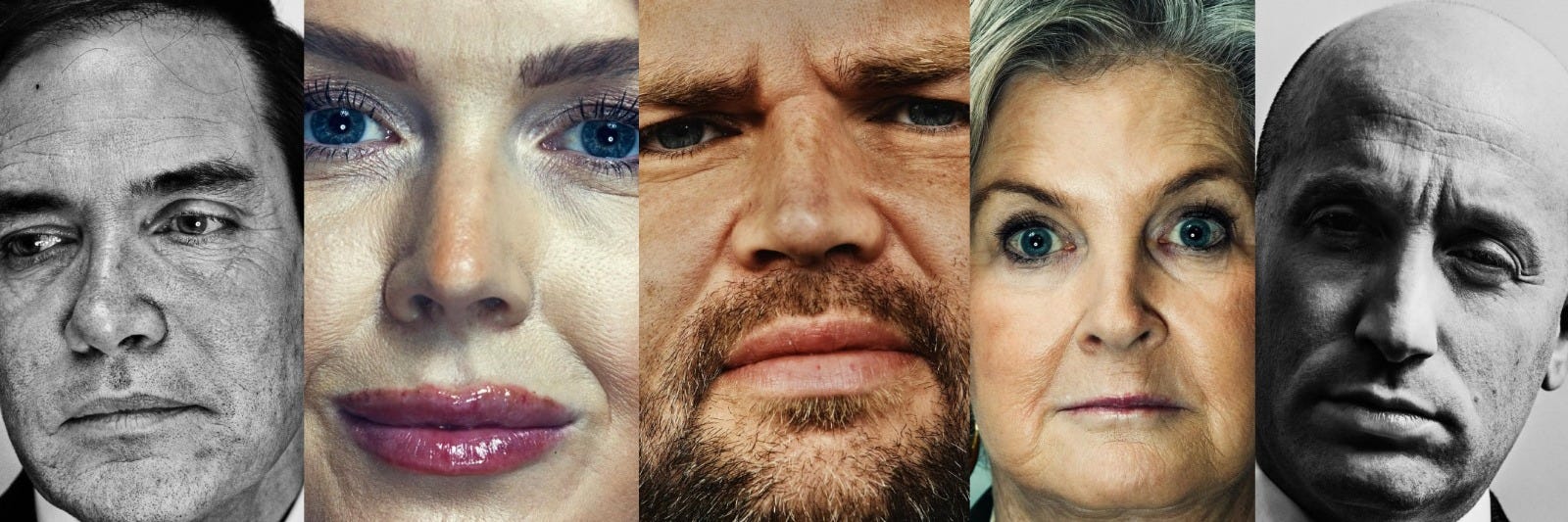
Now, when Vanity Fair planned to do the “White House: Trump 2.0 Edition” issue this December, I’m fairly sure they did not foresee the kind of “heat” the hitmaker would receive. It’s been more than a week since the issue has been out in this wide, wild world — and the conversation on it hasn’t died down yet (makes sense why I’d be super late and still show up at the party!). In an era of minuscule attention spans, a week-long chatter about a single issue itself is a phenomenal feat — something that speaks to how strong imagery still holds the power to shake things up.
Coming to the “strong imagery” part… global photojournalism, especially in mainstream media, has taken a hit over the past few decades. Look closely, and you’ll see how even prestigious media outlets have increasingly become authority-appeasing — conforming to power instead of confronting it, thereby shrinking the space for critical, thought-provoking imagery.
Personally, the last time I came across something “hard-hitting” in mainstream political photojournalism in the US arena was during the Capitol Attack in January 2021, when a mob of Trump supporters attempted a self-coup, two months after his defeat in the 2020 presidential election. I’m sure there have been a few more photjournalistic moments like that since then — think Trump’s bloodied face at the Pennsylvania campaign rally after the assassination attempt, or Charlie Kirk’s final moments during the "American Comeback Tour" event at the Utah Valley University, where he was shot — but none of them have left impressions that could last long enough to remember in a jiffy.
I think that’s enough arguments in favor.
Then there’s been the digital boom, which has democratized “photography” — anyone with a device or gear is now a “photographer” — and diluted the superiority of traditional institutions. At the same time, the algorithm-driven culture has gained supremacy over journalistic integrity, rewarding speed over depth, recognizing engaging reels more than stillness that speaks — and therefore, pushing meaningful work into a dimlit corner.
To put it plainly, the media’s deliberate deference and the cancerous content-and-consumption culture have only paved the path for a steady decline of impactful imagery in the world of meaningful photojournalism.
But maybe now is the time when that dry spell runs its course.
The Vanity Fair ‘issue’
Very few need an introduction when it comes to Vanity Fair — yes, they’re the ones throwing that famously glamorous Oscar afterparty, and yes, they’re the ones doing that binge-worthy Actors on Actors series every year that brings together popular faces of Hollywood (many thanks for the dad-and-son Skarsgårds stint, and I thoroughly enjoyed JLaw’s unserious shades on Leo DiCaprio!).
The point is, VF, being a magazine, is primarily known for its grasp on celebrity cultures and social features — it hasn’t dabbled in politics much. Unless, of course, you count certain pieces like "The Talented Mr. Epstein" (on Jeffrey Epstein) by Vicky Ward, published in the March 2003 issue. But even then, it tracked Epstein’s lavish lifestyle, wealth, and connection to high-profile figures in the alleys of power — not policy or accountability. It flirted with politics without crossing the line.
Cut to the end of 2025.
VF dedicated an entire issue to the people in power and politics, people of the White House — and boy… the impact has been nothing short of unprecedented!
As an individual on the internet put it: “Vanity Fair, I wasn’t familiar with your game. Well Done.”
What game is this internet individual talking about? — Not of thrones, surely.
But political theatrics? Hell yeah!
The circle of power and portraiture
Let’s lay out the facts first: For the December 2025 Vanity Fair issue, acclaimed photographer Christopher Anderson spent a day inside the West Wing shooting portraits of some of US President Donald Trump’s closest aides — starting from JD Vance, Karoline Leavitt, Marco Rubio, Stephen Miller, Susie Wiles, and more.
Given the political climate and the media’s contribution to it, one would usually expect the issue to come out as yet another polished edition on these people, flawless to the T.
But what arrived instead was the polar opposite. When the prints came out, the internet gasped — not in awe, but in utter disbelief. Turns out, the final images are grotesquely detailed: pores, wrinkles, stray hairs, and all. The light switches aren’t edited out, the skin blemishes aren’t retouched to make them look “prettier.” The glaring imperfections remained — stubborn, present, and unedited.
And perhaps, that decision to refrain from making it “prettier” by removing those imperfections made all the difference. The subjects came across real — uncurated, unmasked — even if that meant uncovering the unfiltered side of them. These aren’t some flattering portraits — they are, in fact, unguarded mirrors.
I’m sure you’ve already had the jump-scares by now — Susie Wiles’ blasting eyes, Karoline Leavitt’s supposed lip-filler marks, or JD Vance’s facial expressions (and features) are sufficient enough to trigger that effect. On the surface, it seems like those tight-framed headshots were designed in a way so that the photographer could expose each inch of infection in those people — but what “appears” to be “distasteful” at first glance is simply their own reality magnified. It is as if the camera had playfully stripped away the carefully polished PR veneer they’re used to living under. It’s uncomfortable, yes — but one can’t deny the truth in them.
Care to take another close look?
Let’s start with JD Vance — the Vice President, the assumed successor to President Trump, the heir apparent. There are two portraits of Vance in this VF issue, like the rest of the members of Team Trump — the cluttered shot and the cropped shot.
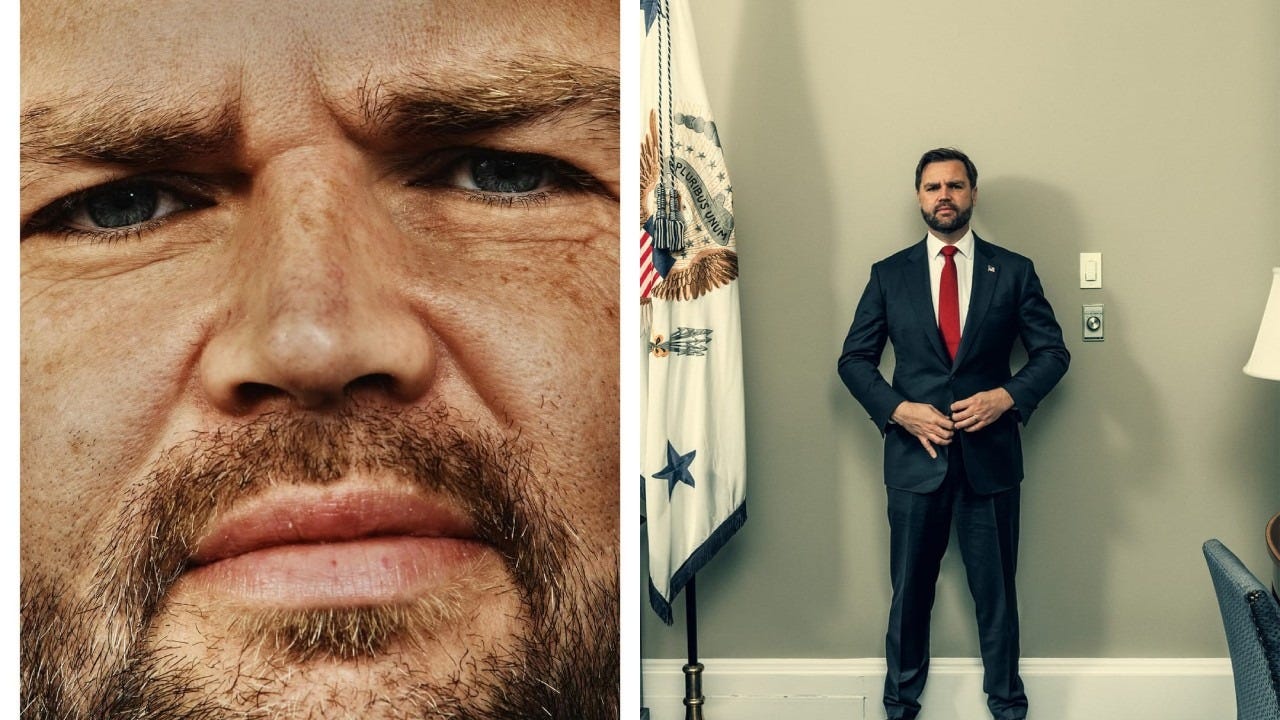
Let’s dissect the cluttered shot first. Look at the composition of the photograph: Vance stands in the middle of what looks like a not-so-organized room, trying to strike a seemingly power-pose, yet still looking extremely standoffish (which he probably is). The flag on his right is cut in half, the lamp on his left remains in the frame with only a corner visible, and a chair plays peek-a-boo in the background. Even though I’m not a professional photographer, I can say this with utter confidence: these unnecessary details could have been edited out of the final photograph that went to print. Then there’s the slight light-and-shadow play on the wall that reduces the gravity of the subject — it makes him look small in stature. It’s not a portrait of a VP — it’s a portrait of the illusion of a supposedly powerful man that’s falling apart.
About the cropped shot — it looks like a freckle-fest on a not-so-pleasant face. The hard light reveals the fine skin texture, the lines around the mouth, the creases on the forehead, and the slightly irritated eyes of the VP. Because there’s hardly any wiggle room to settle into the discomfort of that extreme proximity of a camera — almost intrusive and unwelcome — the headshot only hardens the facial features of the subject and puts him under fierce scrutiny.
Now, I don’t want to sound like Professor Slughorn collecting people for his prestigious photo album, but I do have a few photographer friends (and they’re really good at their job), and if there’s one thing I’ve learned from them it’s this: a good portrait isn’t supposed to make you look unrealistically pretty, it’s supposed to capture who you are — what you truly are. So, if a portrait shot without intervention feels abrasive, maybe it’s because the performance that usually softens their image has fallen away — and the camera isn’t hiding the personality they project.
Moving on to Karoline Leavitt — the youngest White House Press Secretary, or as they say, the mouthpiece. Recent documentation has enough records of her straight-faced lies, so there’s no point going into that right now. What becomes the center of attention this time is her untouched face: uneven skin that might give the Atacama Desert a run for its money, and an appearance — with marks, pores, and fine lines — that is a stark departure from her polished press photos. In her cropped portrait, Leavitt looks like a worn-out woman in her late 40s, whereas she is actually just 28.
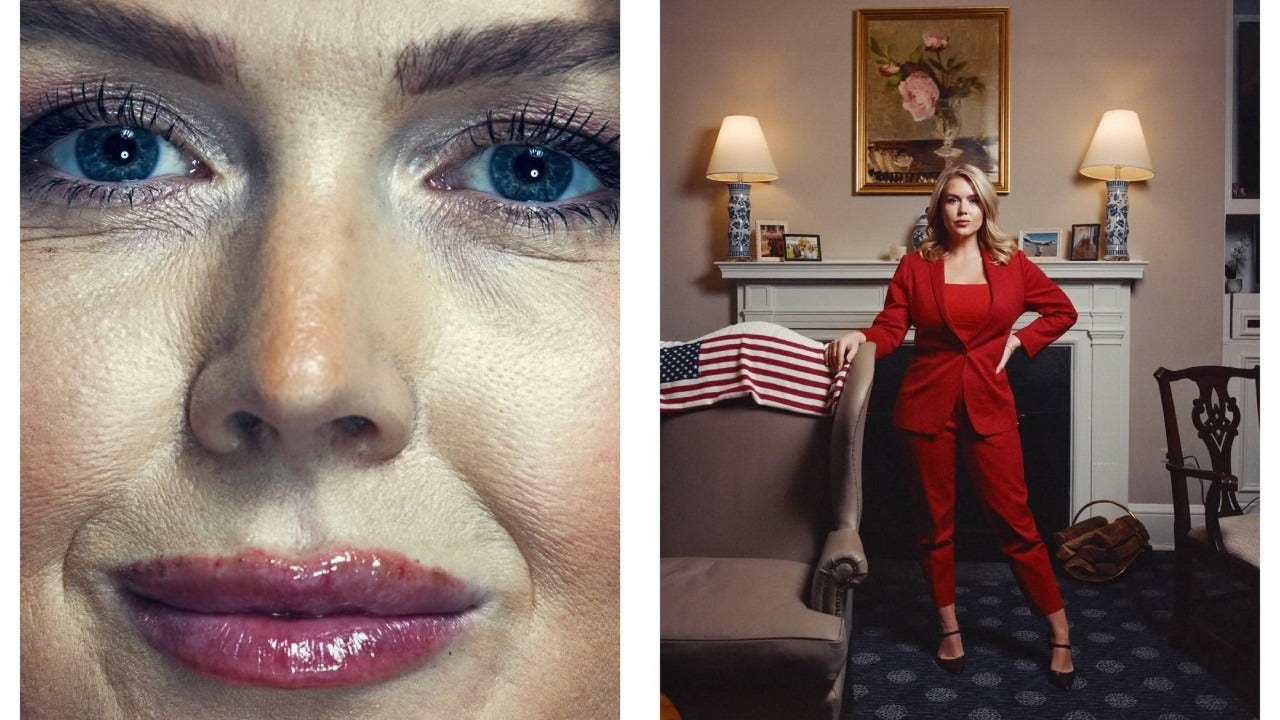
And honestly, contrary to popular perception, the backlash hasn’t been about the speculative signs of lip filler that made this photo the talk of the town. It isn’t about shaming a woman for making choices about her appearance. Rather, it’s the “ugly truth” that comes through in the image. What’s interesting about Leavitt’s close shot is Anderson’s refusal to smooth out the harshness visible across her face — it clearly portrays the lack of compassion the Press Secretary has earned a reputation for. In fact, it poses an unavoidable question: Does truth look unflattering when it confronts carefully curated “images”?
As for the cluttered shot — wrinkled flag, crooked lamps, half a chair, and wooden logs for the fireplace behind her. This kind of “mess” gives more of an ordinary American household vibe, not the White House at all. It’s the classic case of too many ingredients spoiling the broth. But is it a mistake — not editing out those chaotic elements? Or is it a deliberate, clever way of bursting the very bubble these people have desperately tried to maintain in order to establish their superiority, their extraordinariness?
Jump-scare alert! Here comes Susie Wiles — the first female Chief of Staff under Trump, the enforcer with eyes that can put even the eyeless Demogorgons to shame.
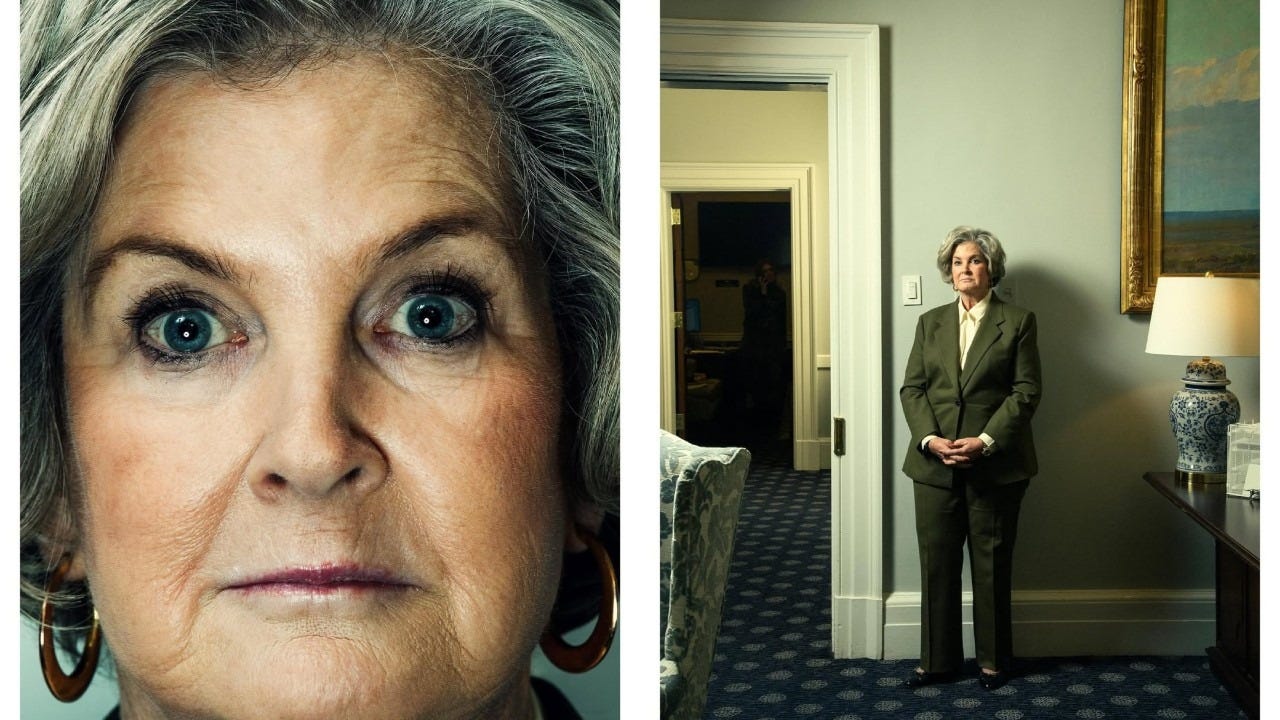
There’s no gentler way to say it: this isn’t a flattering headshot; it’s a confrontation. In fact, Anderson shared in an interview that Wiles even told him, “You’re too close.” He backed up a few inches — but didn’t back off until he’d got exactly the look he wanted.
The outcome? Wiles’ eyes are wide and alert, and every tiny detail — skin pores, wrinkles, makeup, aging lines, even the tension in her jaw — is visible on her face. The lighting isn’t kind either; it unleashes the finer details that offer a glimpse into her stiff demeanor — and it does not look “pretty.” If anything, it makes you stagger a bit — the same way the portrait seemingly caught the subject off-guard.
Wiles’ cluttered shot isn’t comfortable either. It repeats the same recipe — half a chair, half a table, the edge of a lamp, even half a wall painting. What makes this portrait more cringe-inducing is the presence of multiple lines going in different directions, making it feel visually chaotic — “all over the place”. And then there’s this “visually unhygienic” background — a visible light switch behind Wiles, and someone in another room using their phone.
Personally, what makes me squirm about Wiles’ portraits (both of them) is how she is portrayed without any political polish. Instead of the sleek PR finish that makes the likes of her appear like a band of “empowered women,” these images pull out the raw face from that facade — someone who carries the weight of Trump’s brand of patriarchy and misogyny.
Basically, Anderson’s portraits don’t elevate power — they puncture it. Each frame questions not just the subject, but the power-laced myth they’ve built around themselves. The same pattern follows in portraits of Marco Rubio, Stephen Miller, Dan Scavino, and James Blair. Sure, none of them are conventionally handsome men, but Anderson’s portraits manage to peel back the superficial layer, offering a glimpse of what they truly are like — up close and personal.
Personal, political, and the tie between them
Vanity Fair might be a “magazine” — something people usually take lightly as a vessel for softer stories — but this issue is anything but “soft.” This isn’t regular tabloid ragebait dressed as a chic feature. These portraits work against the conventions of political image-making in a visual-first world. They’re not the typical tidy headshots; they’re raw, unfiltered, and untreated with anything that might gloss-coat their true selves. These pictures insist on the raw, granular truth of skin, line, and gaze.
Here’s the thing: there’s a distinct difference between photography and photojournalism. The former is the art of capturing images; the latter is about objectively telling stories with nuance and strict ethical rules. Photography might carry a responsibility to make something look appealing, whereas photojournalism has no such obligation — it’s beholden only to the truth, prioritizing accuracy over artistic manipulation.
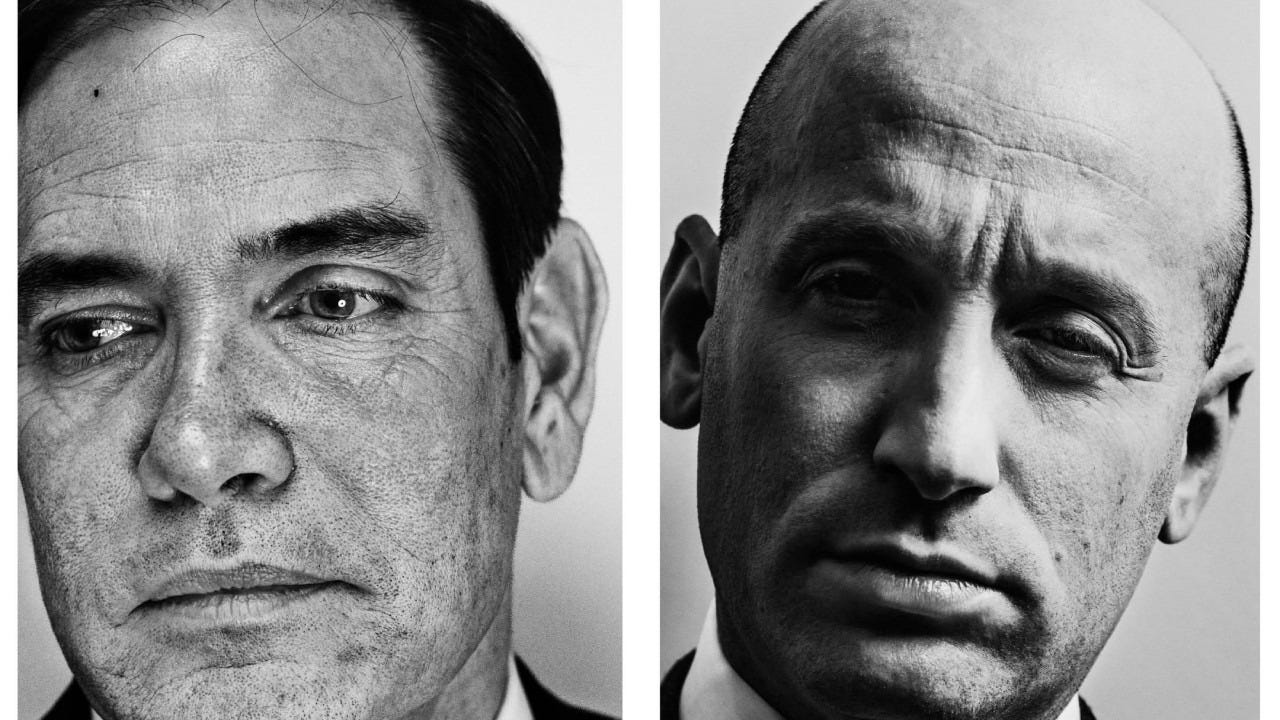
For this Vanity Fair project, photographer Christopher Anderson didn’t “wear my celebrity photographer hat.” When he shared some of the shots on his Instagram grid, he wrote: “My journalistic sensibility just would not be comfortable portraying politicians the way celebrity photographers have in similar portfolios of past administrations.”
And he didn’t mince his words: “Celebrity photos are celebrity photos. Politicians are not celebrities. Let's not mix things up.”
So, it’s no surprise that the results are incredibly attuned. Anderson, after all, refused to remove the reality from his portraiture.
But that’s not to say Anderson invented this approach for the project — “up close and personal” has always been his style. He’s not new to political portraiture either. He’s long been interested in what he calls the “theater of politics,” and much of his early work shows a preoccupation with intimacy and atmosphere. His portfolio includes pored-over, skin-baring shots of Democrats and Republicans alike. His 2014 Stump book focused on campaign rallies, and he has photographed every leader from George W. Bush through Barack Obama (and even the first Trump in 2016) with the same unblinking, unflinching lens.
He has also photographed the who’s who of Hollywood: Martin Scorsese, George Clooney, Jeremy Allen White, Ebon Moss-Bachrach, and many more. Gigi Hadid has posed before his camera; he has captured Rosalía as well. There’s a distinct difference between photographing entertainers and capturing politicians — and Anderson maintains that he “photographs [public officials] as a journalist,” not a glamorist. Talking to The Independent, he said, “I know there’s a lot to be made with ‘Oh, he intentionally is trying to make people look bad’… that’s not the case.” He adds, “These people are civil servants. She’s (Rosalía) an entertainer… I photographed her in a different way. Their context is totally different.”
With Anderson, the difference isn’t a lack of craft — it’s a shift in context, intent, and tone.
For example, Anderson’s portraits of Rosalía are warm; his Obama portraits feel quietly intimate; whereas these Trump 2.0 portraits feel almost interrogatory.
But Anderson insists his intent was not humiliation — he was not trying to “make anyone look terrible.” Like any other project, his goal was to let the camera do its job truthfully. In his own words: “My intention is not mockery or cheap shots. I’d like to think I’m a stone-faced but critical observer.” He only accepted the Vanity Fair assignment after confirming the brief was a journalistic one. He plainly admits that, as “a professional noticer,” his job is to “cut through the image that politics wants to project and get at something that is more truthful” — and he delivers on that claim.
Lights… camera… the game of gaze
Portraits — especially those of political figures in positions of power — demand attention. Most of the time, they’re photographed in a way that commands respect and reverence. People expect the powerful to be polished. And that expectation isn’t just aesthetic — it’s political.
That’s the thing about political image-making: it has always been about control — of message, mood, and, crucially, optics. When someone who holds or shapes power looks more like a person made of flesh, blood, bones, and blemishes, they become touchable subjects instead of distant piles of proclaimed accomplishments. That close personal peek disrupts the familiar script. It reinforces the idea that no amount of spin can completely hide a person’s soul from a camera’s gaze.
Call it the “crooked face” effect: the hardest lines and sharpest glares end up on camera. When brought into the light, body language speaks louder than any superfluous expression. These portraits, in fact, underscore each person’s demeanor at that moment — some looked slightly vexed, some somewhat startled; some looked like evil reincarnated, and some just too drained to be bothered. In sum, all of them looked belligerent enough to give away the dysfunction thriving under the current administration.
We’ve seen a similar phenomenon before. When, in 1933, photographer Alfred Eisenstaedt, a German-born Jew, snapped Nazi propaganda minister Joseph Goebbels looking down at his camera, the portrait caught him with “hateful eyes,” frowning at the lens. Eisenstaedt revealed that the second the subject realized who was behind the camera, “he looked at me with an expression full of hate… the result was a much stronger photograph.” The implication of that portraiture was quite clear: when a man with malice in his mind faces a lens of a photojournalist, the camera can lay bare what his face cannot hide behind the performative persona.
Anderson’s Trump 2.0 portraits operate on the same principle. If there is anger, fear, or loathing in the corridors of power, it shows up in the fine print of their skin. In one of his interviews, Anderson shared how Miller himself acknowledged the power of their interaction after their session, saying: “You have a lot of power in the discretion you use to be kind to people in your photographs.” — To which, Anderson calmly responded: “You do too.”
That’s what this issue of Vanity Fair has been all about — the example of subtle strength and quiet power of ethical photojournalism.
In this issue, Vanity Fair wasn’t trying to “celebrate” these figures, or “glorify” them — it was treating them like any subjects of power. So, if Vanity Fair played the game of gaze here, it’s their photojournalistic ethics that held the power. The magazine commissioned reporting that peeled back a year of chaos inside the West Wing; it paired Chris Whipple’s reporting with Anderson’s portraits to create a two-part portrait of an administration’s mood and mechanics. Vanity Fair’s editors didn’t hide behind trickery — they assigned a photojournalist who could portray the people running the country exactly as they are.
In a way, Vanity Fair simply held up a mirror — and it turns out that under the glare, even masters of the game look a little shaken. The crooked eyebrows, pursed lips, and slightly defiant stares are reflections of what lies beneath. Whether you call it truth to power or puppets in a failing act, these portraits confirm that when leaders spew vitriol, it shows up in their visage. Hate and rage have a way of deepening furrows and sharpening eyes.
In the conversation that followed — rage, defense, retaliation, analysis — what remains clear is this: the photos did exactly what good visual journalism should do. They forced us to look — closely. And when you do so, the face shows you things words sometimes can’t: weather lines, the tilt of an eye, the stubborn geometry of a mouth that pulls apart the veil from the tangled and anxious mind. Body language, anyway, is more authentic than rehearsed speeches. Those misperfections do not necessarily prove moral failings — but they do ask questions. And in a functioning democracy, asking questions is not just necessary — it’s a civic duty.
As for a powerful portrait, Eisenstaedt implied it best: the portrait lens collects it all. And in Trump’s White House, that lens pulls no punches.