
There is a running joke among my friends that goes like this: “You want something done by Sneha? Your best bait is Harry Potter — anything on it!”
To be honest, this is more of a factual statement than a mere joke. In my case, even the Holy Grail contains less truth. I really am a deeply nostalgic person, especially when it comes to Harry Potter. So much so that I proudly wear a Harry Potter-inspired tattoo (one of my earliest inkings), and a Sorting Hat squeezy on top of a cauldron-shaped cup sits on my table. I even used to have a functional Pottermore account, and “Potterhead_95” used to be my top password pick for every social media account.
I know — it sounds naive. Maybe too “fanatic,” even. But hey, it does come from a place of thriving nostalgia. More than that, it comes from a place of irrevocable fondness — something I still have in abundance for the franchise. Only now, the moral compass keeps meddling with it.
Now, although my nostalgia for Harry Potter is alive and kicking, I do not mind admitting the uncomfortable reality of consumable nostalgia: this particular emotion is a well-behaved little capitalist. When done right, it behaves like a currency that never crashes. It works like a banknote that never goes out of business.
Harry Potter is that banknote for a whole generation — especially for ’90s kids — that keeps funding our nostalgia. Personally, I still go back to the books from time to time, use the films as white noise, change my ringtone to John Williams’ Hedwig’s Theme, and still get excited at the possibility of unnecessarily spending money on themed merch.
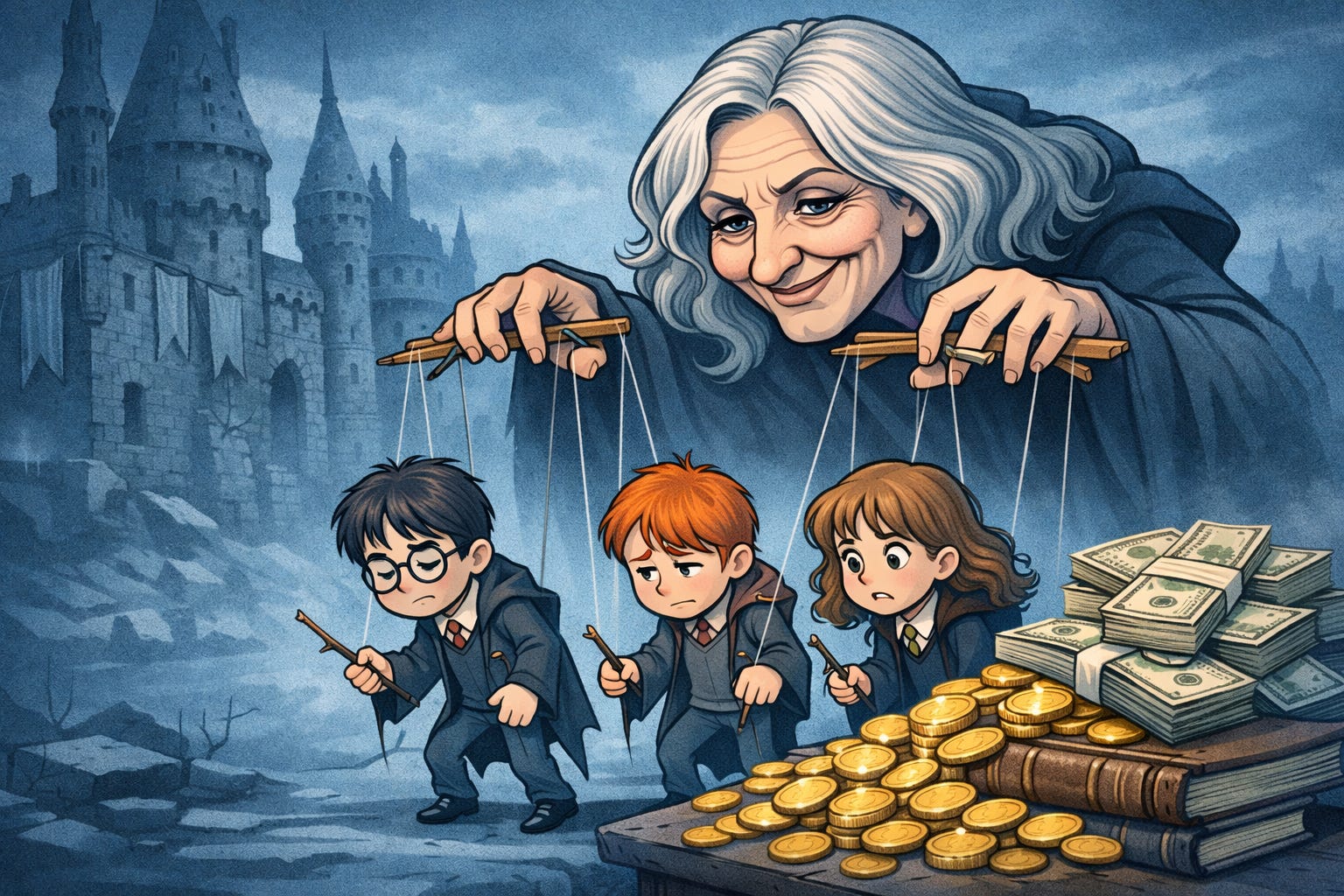
You see, this is exactly how and why Harry Potter is also one of the most failsafe money-making machines for the author, who now is a spitting image of the one who should not be named — the one who had the door wide open to the world of witchcraft and wizardry in the first place.
So, to see Joanne Rowling being up and about, using her most profitable intellectual property in order to fulfil her ulterior motive — to fuel hatred and violence against a very specific community — is not surprising at all.
The question is: how is she faring so far in her pursuit?
Moreover, how are we responding to her initiative?
I shall be honest — I was not looking forward to the new Harry Potter TV series HBO is coming up with. Joanne, with her crooked words and deeds, made sure of that vehement disinterest. But I was still curious to see what she and HBO were cooking.
One thing led to another. I pressed play and watched the teaser of the upcoming series.
And boy, curiosity butchered the cat right there!
The first bummer is the colours.
I am not sure if, while making the Harry Potter series, HBO got the memo to make their own version of Adolescence, but the colour grading certainly screams it. The entire colour scheme is so cold, blue, grey, and grim that it reeks of everything opposite to joy, warmth, and what magic should feel like. It is almost as if an HBO prestige drama forgot that it was supposed to be about children discovering the joy and wonder of magic, and decided instead to become a serious adult trauma-processing machine with Hogwarts as its emotional support poster!
And since we are talking about “vibes,” even sonically, it is a flatline.
There is no John Williams-esque magic in the music — no rousing intro, no rizz. The music does not even touch the heartstrings, let alone have them soaring. In fact, it settles for generically ominous chords, giving it an oddly adult thriller vibe.
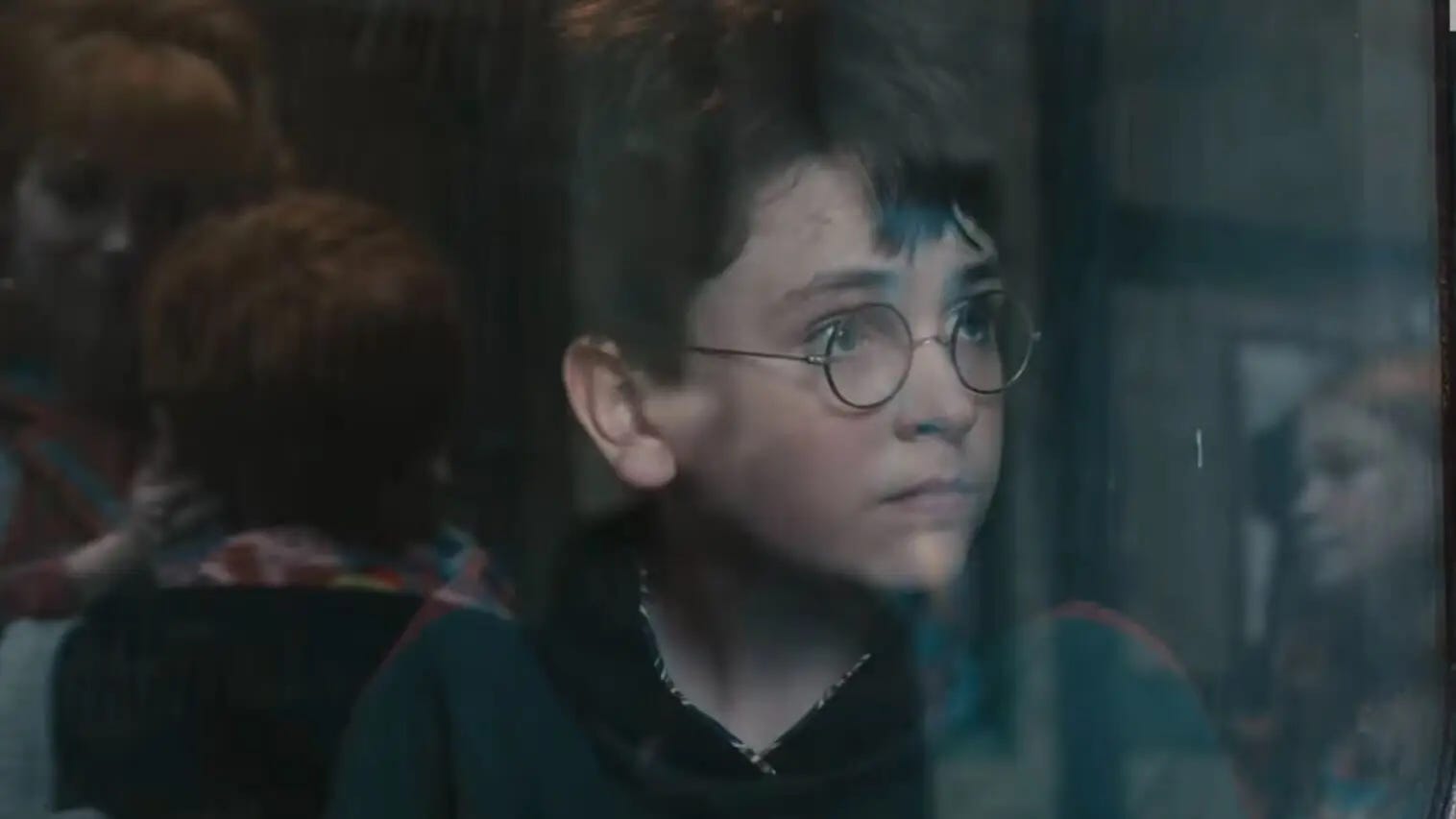
Then comes the casting ick.
Dominic McLaughlin’s Harry looks sweet with the glasses and the smile, but when he enquires of Hagrid about his parents, his voice does not seem to have the childlike wonder laced with the sadness of not knowing much about them. Instead, he sounds like a chronically depressed juvenile undercover agent trying to figure out his parentage. Nick Frost’s Hagrid is no comparison to Robbie Coltrane’s big-hearted, sweet-smiling giant — he does not have one ounce of the twinkle in his eyes that Coltrane’s charm conjured. Rather, he looks like a shady man snagging off a kid with delulu stories. Arabella Stanton’s Hermione is pretty unremarkable too, especially for the brightest witch of her age — she has nothing extra to her fairly ordinary presence. And then there is Bel Powley’s Petunia, who comes with big eyes and a blonde wig as if hunting kids is her day job. And for Draco Malfoy, Lox Pratt looks like he is going to spit some bars for a TikTok rap battle anytime soon!
Moving on to the adult team of Hogwarts, John Lithgow’s Dumbledore and Janet McTeer’s McGonagall did not leave me with much of an impression — and I am still unclear on whether that is due to their blink-and-miss presence in the teaser or the overall ill-fitted casting. As for Paapa Essiedu’s Snape, I assure you this hot take is not a racist jab — but it truly seems like an outright insult to the character in the name of inclusive casting. At best, he can portray Snape if the potion master were smuggling dicey potions through Knockturn Alley, thanks to his affinity for the dark arts.
The only character that somewhat worked for me was Alastair Stout’s Ron; that redheaded kid made me smile in the end with his “poof.”
All this hullabaloo for something that claims to take us back to Hogwarts — their version of Hogwarts, which does not even feel like home.
But we already had a perfect Philosopher’s Stone, and a Hogwarts with the grandeur of the Great Hall, unforgettable feasts, the enchanted high ceiling, and everything else imbued with magic.
Chris Columbus, as the director of the film, understood the assignment to a T: the palette brimmed with the warm glow of colours, joy, childlike wonder, and rich magical vibes instead of lifeless, desaturated gloominess. In the OG films, the Hogwarts Express’s whistle greenlit our favourite adventure, and the towering Hogwarts castle invited us home — one that made space for fun, fuzz, friendships, and more. The cherry on top was John Williams’s music, ushering in a world that teased the possibility of miracles unfolding right before our eyes every step of the way — in the alleyways of Diagon Alley, through the hoops on the Quidditch pitch, the corridors that led to the dungeon, or even when the staircases changed their direction.
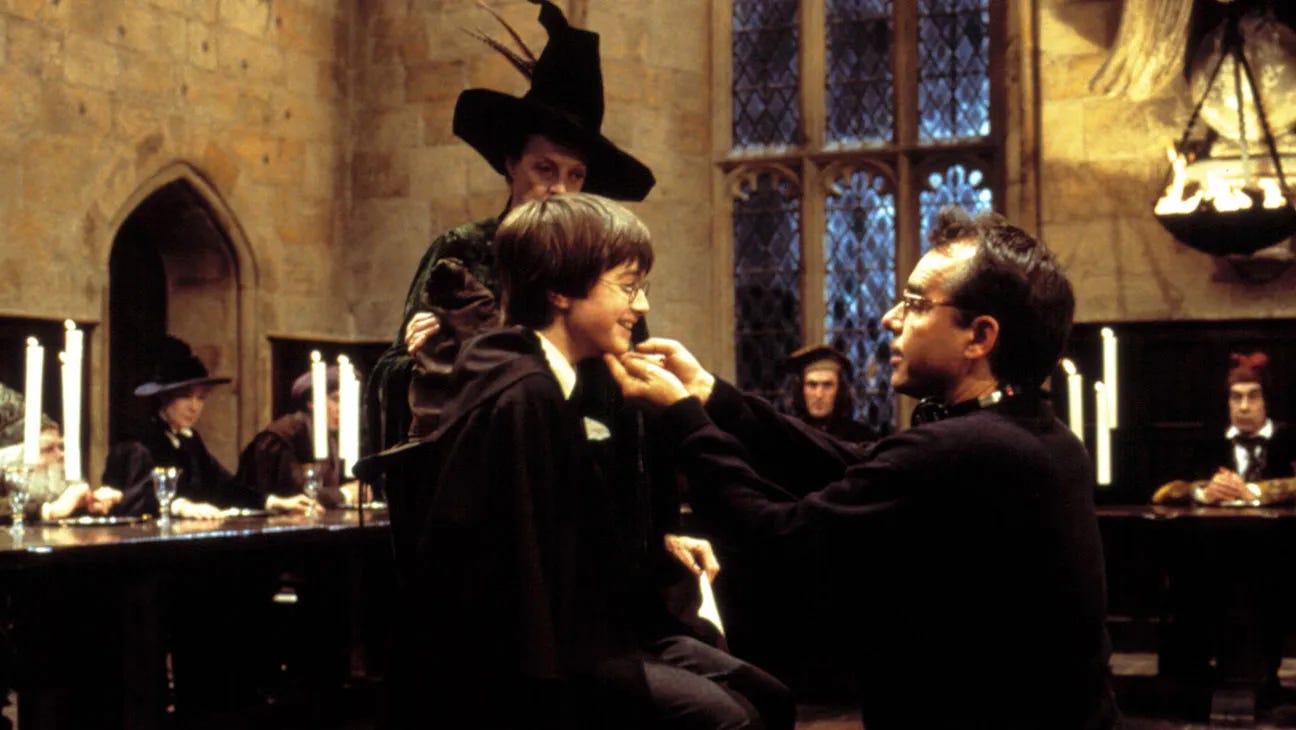
The former film was built on the belief of enchantment; the new series looks like it is structured by the rules of Rowling’s brand management. It is a far cry from all that cosy charm that made the magic feel attainable. In fact, it is much worse — it feels like the emotional equivalent of reheated butterbeer, only much more bitter!
Basically, it is HBO-coded Game of Horcruxes, sans the rampant sex and bloody violence. And for a softcore Potterhead like me, that is a serious crime against childlike wonder and whimsy.
What, then, is the point of remaking something that already exists in nothing short of perfection, only to make it much worse?
The answer is in Joanne’s Voldemortish ambition.
One thing about Harry Potter and the world of witchcraft and wizardry: it was never only about the boy with the scar fighting evil for the greater cause. It is a story about hope, friendship, courage, and solidarity across difference. It is about the emotional architecture that held millions of us up while we were figuring out who we were. It taught friendship before adulthood taught us to become suspicious of it; courage without making courage look risky. Taught loyalty, resistance, solidarity, unity in diversity, and the radical idea that people from different backgrounds can build a common home and call it magic.
It gave many of us the belief that the real spell is not in the wand at all — it is in the choice to stand with the vulnerable, to protect the outcast, to love the misfit, and to keep going when fear gets loud. We learned that true magic lies in compassion and in standing together against injustice. These lessons shaped a generation: Potterhead kids became adults who (ideally) carry empathy, inclusivity, and decency in their hearts. That is why the franchise still lives in people’s bones. It shaped not just taste, but conscience.
And those values were embodied not just on-screen but off. For years, the actors who played Harry, Hermione, and Ron — Daniel Radcliffe, Emma Watson, and Rupert Grint — have tried to live up to that legacy in real life. They grew from child stars into adults who understood what the story had taught so many of us. They used their platforms to stand up for human rights and vulnerable voices.
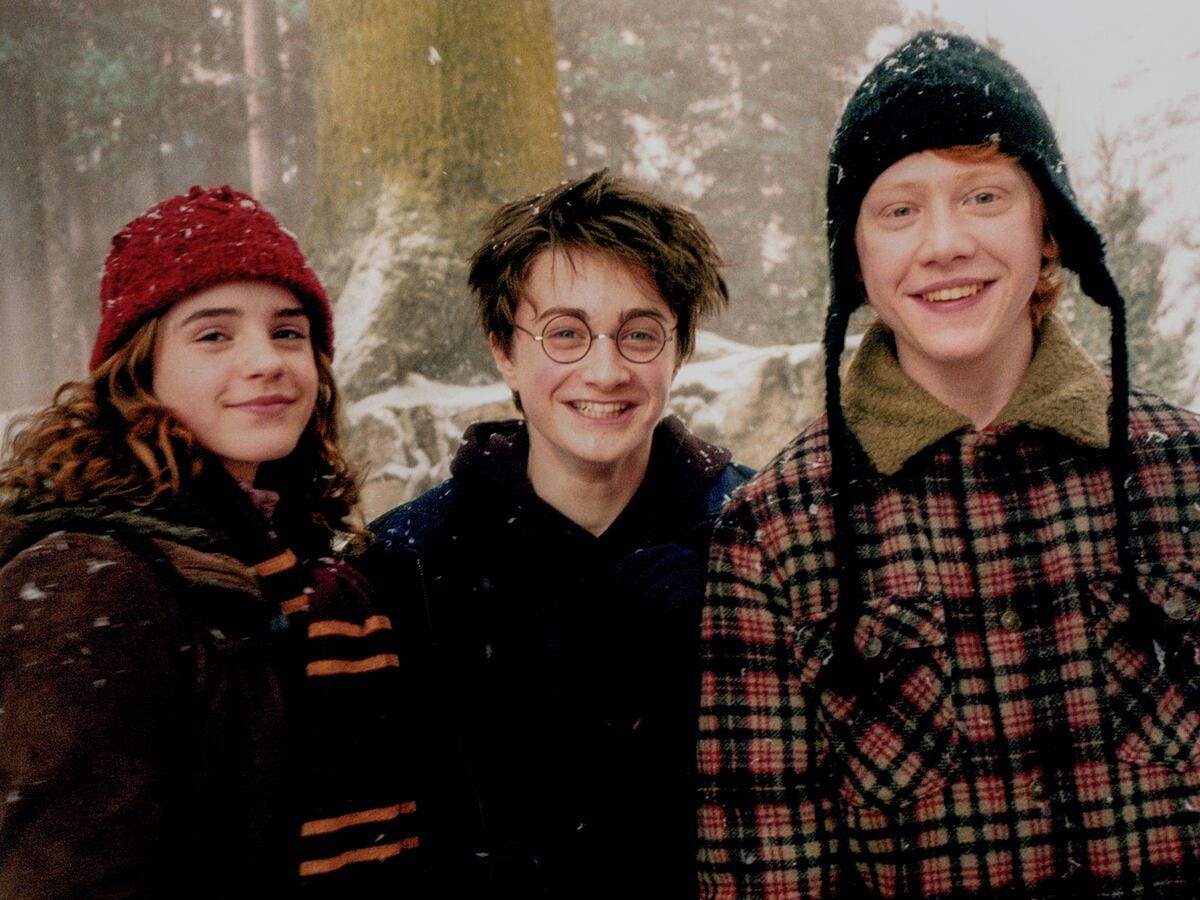
When Rowling’s fall from grace cast a dark shadow on the entire Potter fandom, it was the golden trio — the three musketeers — that helped carry the torch of that magical world. It is no wonder we associate them and their legacy as the relic of the fandom — and not the author’s hateful being.
For those like Tom Felton (yes, our OG Draco Malfoy) who are yet to be “attuned” to what has been going on, here is a quick rewind.
The unravelling of Rowling started with a careless tweet and turned into a full-blown anti-trans crusade. The shift began around 2018, when Rowling “liked” a tweet referring to transgender women as “men in dresses.” She later claimed that it was accidental, but quickly doubled down on her stance on sex and gender. In 2019, Rowling backed Maya Forstater, a woman who supposedly lost her job for saying trans women are not women. In 2020, she published a long essay on her website defending her right to speak about trans issues and saying she was worried about “the new trans activism.” In that essay, she also referred to “people who menstruate,” tweeting mockingly, “Wumben? Wimpund? Woomud?” That same year, she published a 3,600-word essay defending her “gender-critical” stance on bathrooms and single-sex spaces. Give it to the woman’s consistency!
In 2024, Rowling donated £70,000 to For Women Scotland to help an anti-trans legal challenge redefining “woman.” Organisations she founded (like Beira’s Place, a women’s shelter) refused to serve trans women as women. In interviews, she insisted there are “no trans kids” and that “biological sex is real,” while vilifying gender-affirming care and queer activism on social media.
By 2025, Rowling had made it abundantly clear: her mission was now political retaliation, not establishing a difference in opinion. She was using her fame and her vast fortune to bankroll an anti-trans movement. Just last year, she launched the J.K. Rowling Women’s Fund, which provides legal funding support to individuals and organisations fighting to retain women’s and girls’ sex-based rights. That same year, the UK Supreme Court ruled that the legal definition of “woman” under equality law refers to biological sex, and Rowling publicly celebrated the ruling on X with the line, “I love it when a plan comes together.”

For Potterheads who grew up believing in her words to wield magical power, this genre of malice was unfathomable. It was not just a simple heartbreak to see one of your icons falling so staggeringly from grace — it was a kind of betrayal that came from the notion of falsifying everything we were taught to root for.
That storm was somewhat weathered only because Dan, Emma, and Rupert kept reprising their roles off-camera and beyond the script. They publicly opposed Rowling’s remarks on transgender women, their identity, and their rights.
Dan wrote via The Trevor Project: “Transgender women are women. Any statement to the contrary erases the identity and dignity of transgender people and goes against all advice given by professional health care associations who have far more expertise on this subject matter than either Jo or I.” Emma posted on social media that trans people are who they say they are and deserve to live their lives without being constantly questioned. Rupert said, “I firmly stand with the trans community… Trans women are women. Trans men are men. We should all be entitled to live with love and without judgment.”
These were not just for the “show of solidarity.” These statements mattered because they showed something simple and rare: the people who once played the heart of the story seemed to understand the heart of the world.
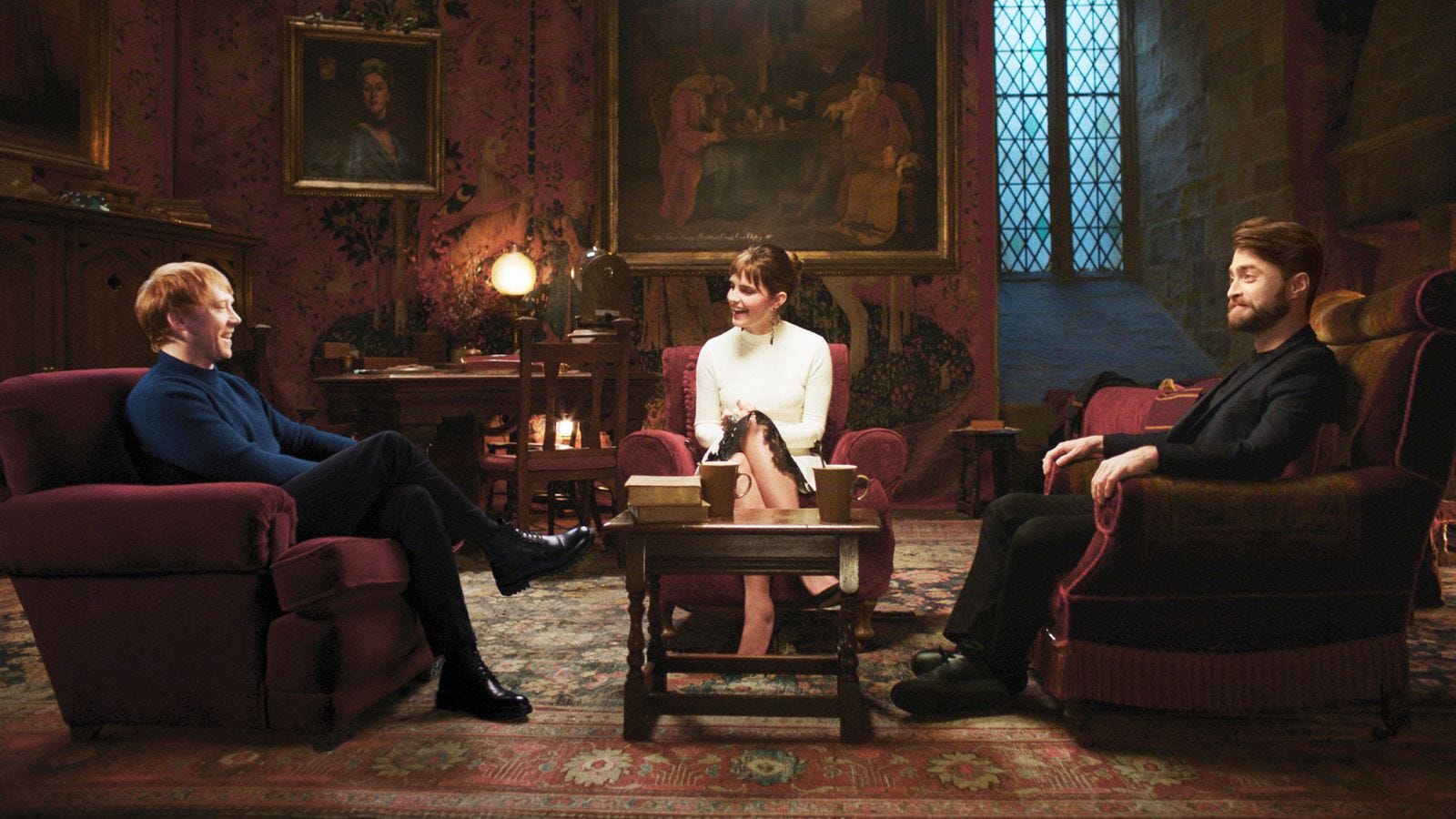
Of course, Joanne was angry, bitter, and kicking about not being celebrated and paraded as before, and she fired back at any colleagues who criticised her. She even called Emma “ignorant” and responded to every naysayer on social media.
It came to a point where the public dispute with the three original Harry Potter stars had become a full-blown culture-war wound. The more Dan, Emma, and Rupert signalled support for trans rights, the more Rowling kept firing back.
But something shifted in the fandom because of this back-and-forth.
While the war was raging on, the axis of power and agency tilted — the centre of the fandom shifted from Rowling to those who seemed to stay truer to the values Harry Potter taught us, specifically Dan, Emma, and Rupert.
That is where the Harry Potter TV series comes into play.
On paper, this should have been simple: a new adaptation, a new generation, a chance to revisit a classic with fresh eyes. Instead, it appears more like a reclaiming operation on Rowling’s part. After years of seeing her name tarnished, Rowling is seemingly taking the reins again. The HBO series is not a love letter to an evergreen story — had it been so, it would have looked the part. Instead, it looks like a lifeless corporate and ideological rebranding of her own lucrative legacy.
It is almost like the witch-in-charge is announcing: forget the original cast, forget the old emotional contract — this is my property again.
Sure, the creatives and executives behind the show publicly promised that Harry Potter is not secretly being infused with Rowling’s personal views. But in practice, every penny this series earns will mostly end up in her pocket, because Harry Potter ultimately is her IP — her own piggybank that has not run out yet. And while the visibility translates into currency, she ends up using it to fund her transphobic doll-hunt.
It is somewhat poetic because it makes sense why the teaser comes across as so devoid of joy and so lifeless — almost like an unsolicited dementor’s kiss! The aspiration behind it is not driven by the joy of storytelling; it is the objective aim to reposition the Rowling brand. It has all the ingredients and none of the alchemy. It does not feel like the return of childhood.
Where is the spark? Where is the grin? Where is the golden, silly, vulnerable, enchanted feeling that made the stories impossible to forget?
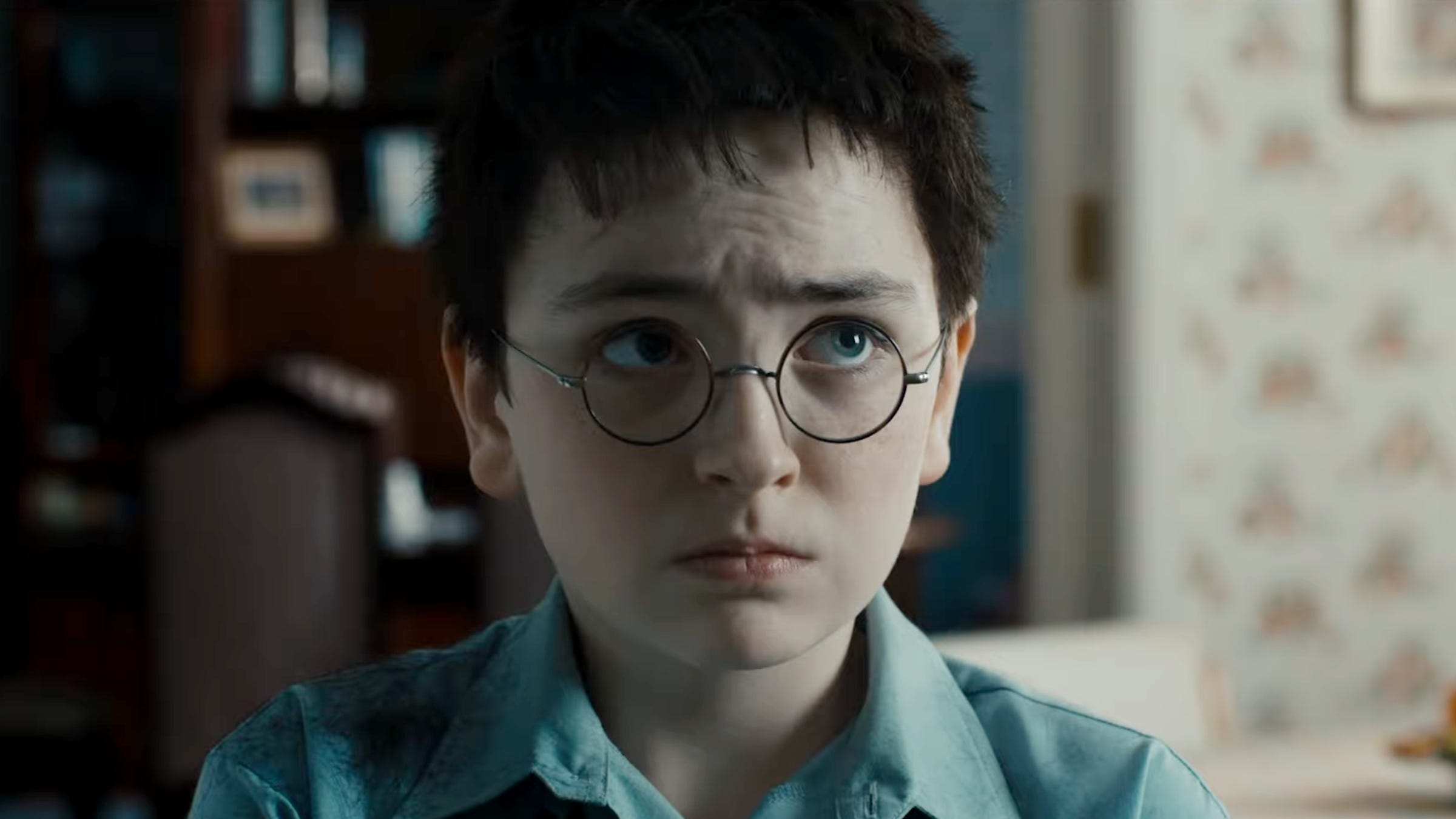
Instead, it feels like a problematic, egomaniacal landlord repainting the walls to cover the vintage sentiment and selling the new sheen as magic. In truth, it is very much like squeezing a lemon to the extent that it turns bitter.
And as a Potterhead, that is the heartbreak of it. The franchise once made so many of us believe in the best parts of ourselves. It made friendship feel noble, bravery feel possible, and difference feel like strength instead of a threat. The books celebrated solidarity and resistance against bigotry, reminding us that “the strongest force” is love. It taught a generation to recognise cruelty and mistrust it.
Now, Rowling is standing against everything Harry Potter taught us. Today, she stands so far from the values embedded in the books that it is hard not to feel the contradiction in your teeth. It is not just about disagreements anymore, but the way the disagreement has become the identity of a world that once felt inclusive and safe. She is using one of the world’s greatest fandoms to spread fear and division — the very poison her stories warned us about.
And she is doing it all to reclaim the agency she has lost over her own creation. She knows that a big chunk of the fandom remembers Harry’s courage, Hermione’s bravery, Ron’s loyalty, Dumbledore’s wisdom, and Snape’s sacrifice more than they remember Rowling’s hate tweets. We know, true Potter magic lies in kindness and courage, not in Twitter rants or cash-grab projects.
For those of us who have cherished Harry Potter’s values of love, loyalty, and acceptance over the years, streaming the new series does not sit right — because that would directly reward Rowling’s bigotry with more billions, effectively turning nostalgia into revenue for hate campaigns. It is only natural that Potterheads, with their heart in the right place, are already refusing to give Rowling that satisfaction.
For us, the allure of Potter magic is real — but not at the cost of funding the very brutality it once taught us to resist.
After all, Daniel Radcliffe himself wrote that whatever Harry Potter meant to us is sacred and untouchable — and no amount of propagandist hype or authorial vendetta can take that away from the fans.
And maybe that is where the real line is drawn.
It is not about choosing between old and new, or the films and the series, but between what the story taught us to believe — and what its creator has chosen to become.
Because you cannot build a world on the idea of love defeating hate, and then profit from hate in its name.
At some point, the spell breaks.
Stories outgrow their creators. They belong to the people who carry them forward. And somewhere along the way, Harry Potter stopped being about Joanne Rowling and started being about what it taught us to be.
That is why the real magic was never hers to reclaim to begin with.
If the magic ever stood for anything, it stood for choosing empathy over cruelty, courage over silence, and people over power.
When it deviates from that path, it stops being magic — it is only maintenance for the sake of rebranding, reputation, and revenue.
We Potterheads know: there is no place for this genre of maintenance in Hogwarts, not even in the Room of Requirement.