
Author's note: The author is well aware that it's not January 26 today; so technically, today is not the Republic Day. She wrote this piece yesterday when it was still the Republic Day and left it in the drafts, completely forgetting the part where she was supposed to press ‘publish’. The author also hopes that her kind readers would not hold that very human (and slightly technologically challenged) err against her.
Unless you’re living in some faraway mountain town, under a thick blanket of snow, struggling to run your daily errands and manage the electricity consumption at home so that the power backup can sustain for a few more days until the actual power comes back — you’re aware of what day today is. Yep, one of those biannual days when the whole country’s “josh” is so high that even one’s noise-cancelling headphones can’t help much amidst the medley of FA9LA and Aye Mere Watan Ke Logon on repeat, with some Sandese Aate Hai thrown in the mix.
You know it already: it’s the Republic Day of India, and honestly, at this point, there really is no other way to mark this day than talking about that one-of-a-kind playlist. Because everything else that once stood for the Democratic Republic of India has—to put it politely—gone down the gutter in the last few decades. In fact, these days, when we discuss where exactly “sabse aage honge Hindustani,” we mostly think about corruption, joblessness, communal violence, minority lynching, falling value of the currency (INR), and more along that line (add global hunger index, and press freedom index to that list — you get the gist). The only few aspects we’ve rapidly grown at are petrol prices, random mandirs, and propaganda films.
Now, I can’t do much about petrol prices or random mandirs as of now — apart from practicing my own ritual of being mindful and an atheist as f***. What I can do, though, is write about films — in particular, the propaganda films.
So, that’s what I’ll do.
I’d start off with stating a simple fact: I am an anti-national person; I’ve always been, and I’ll always be — unless I develop Early-Onset Alzheimer's or something like that. In that case, if that disorder screws with my brain wiring, I’m doomed. Here’s hoping that, no matter what disease it is, it wouldn't mess up my brain’s architecture: where the people (especially the lesser-privileged and oppressed ones) lie at the core of my political values, and their well-being (being fed, clothed, provided for, and looked after as they need) is the only religion I care about. Any ‘ism’ that doesn’t ensure the dignity of all-encompassing living of people, is bullsh** to me. And as for the recreational part, I’m a big fan of the kind of culture that uplifts and unites rather than leaving a country divided and in pieces.
With me, so far? On to the next chunk then, as long as my brain chemistry’s working fine.
Propaganda in films(?)
This really shouldn’t come as a shock to anyone reading, but let’s start with the sheer definition of the word itself.
What exactly is ‘propaganda’? As Britannica puts it, propaganda is the deliberate, systematic, and often biased dissemination of information—including facts, rumors, or half-truths—designed to influence, persuade, or manipulate the emotions, attitudes, and behaviors of a target audience. It is commonly used by governments, organizations, and individuals in political, wartime, or commercial contexts to advance a specific agenda or ideology.
The purpose of propaganda is to sway public opinion, mobilize action, or demonize an opponent. And the methods used for it? Think of techniques such as emotional appeals (fear, anger), loaded language, misinformation, repetition, and bandwagoning (peer pressure). As for the vessel, propaganda can appear in many formats, including posters, media, social media posts, films, and speeches.
Presuming that you read and choose to keep yourself in the loop of awareness and understanding, you must have noticed a steady and stark change in the fabric of our mainstream entertainment material. In recent years, Indian culture has seen a clash between two kinds of patriotism. One is a quiet, constitutional patriotism: it’s rooted in humble pride, in justice, equality, secularism, and dignity for all our fellow citizens. The other is a crackpot reincarnate: it’s loud, divisive nationalism — boisterous majoritarian fervor that only feeds on fear-mongering, enmity-breeding, and hatred-fueling. In case you find it slightly difficult to place what’s what, just imagine Ravish Kumar and Arnab Goswami for two camps, respectively, and you’ll get the gist.
The truth is, these two kinds of ‘isms’ have always existed — not just in India, everywhere in the world. Men—brainwashed (inspired, influenced, call it whatever you want) or otherwise—have murdered, butchered, and massacred their own countrymen in the name of love for their country — without even realizing the acute irony in their actions. We’ve read about those actions, we’ve watched documentaries where the consequences of those actions have been recorded. Then, why all of a sudden should the existence of jingoistic ‘nationalism’ start bothering us?
Because in the last decade, this brand of nationalism hasn’t only seeped into the mainstream consciousness via mass entertainment content — now, it has come to threaten the co-existence of the alternative concept, the quiet patriotism.
And this turntable has been engineered by none other than Bollywood: the industry that once produced, nurtured, and took pride in movies like Rang De Basanti, Swades, Airlift, Raazi, Sardar Udham, and a few more, now bangs its chest at the beat of propaganda projects like Uri, Chhaava, Dhurandhar, and whatnot. What’s more worrying is that the “artists” helming these projects are on board, and more than aligned with the chest-thumping for propagating aggression, glorifying war, and stoking religious hatred while giving it the name of “deshprem.” In fact, at any given point at some promotional event for these movies, the “stars” wouldn’t mind distorting the recorded history and sticking to misinformation (and misinterpretation) in the name of their “artistic liberty.”
Sounds scary, yet?
Mass media as a manipulative tool
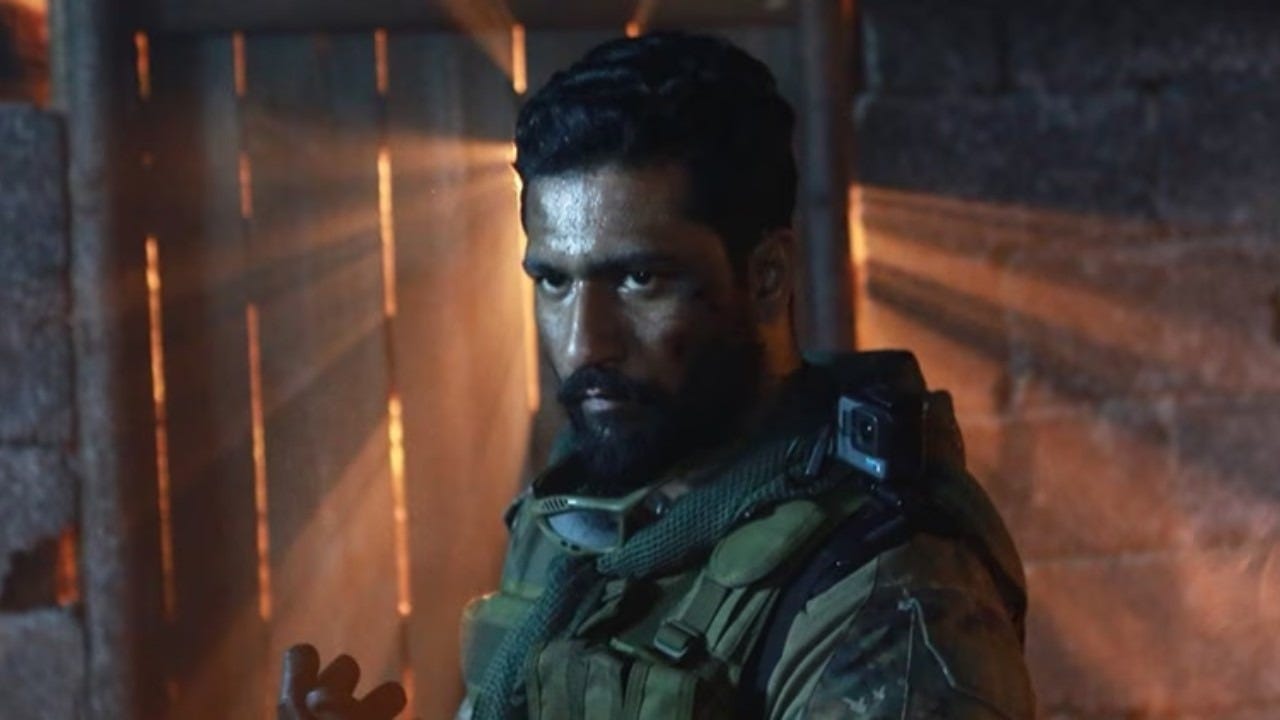
Let’s start with Uri: The Surgical Strike, because the “josh” about this film in most people’s minds is still high. Directed by Aditya Dhar and starring Vicky Kaushal as the male lead, Uri came out in 2019. What is the film about? A military strike in Pakistan. But that’s just where it starts. Uri takes the 2016 military strike against Pakistan and dramatizes it to the extent that you might be left thinking: “Is war good because it’s sometimes necessary? Or is it because vengeance feels more satisfying?”
Now, for the unversed, that latter subtext is what jingoism essentially is all about.
Britannica saves the day once more, as it figures out how jingoism is nothing but an extreme form of aggressive nationalism characterized by an irrational sort of belief in one's own nation's superiority, and that it often manifests as fanatical patriotism, favoring the use of threats, violence, or military force over diplomatic solutions to advance national interests.
Go back to Uri now, and think. The film checks all the boxes: there are impassive heroes chanting ‘Jai Hind!’, cartoonish Pakistani villains, over a thousand clichés about Pakistanis [and] Muslims, and whatnot. Essentially, Uri might as well pass with distinction as a beginner’s guide for Pakistan(i)/Muslim hatred: it trades nuance for muscle, and pulls all the tricks to establish the already-well-known, still dangerous stereotypes — every Pakistani (or even just Muslims) is a terror suspect, every Indian (especially, Hindus) hero is fearless — feeding a binary worldview of “us versus them.”
How does that “josh” in Uri sound now?
Take Tanhaji: The Unsung Warrior for the next example. The Ajay Devgn-starrer Om Raut directorial was supposed to navigate a 17th-century Maratha-Mughal war. For those who aren’t aware of the history, I’ll cut out the jargon: Subedar Tanhaji, a general of Chhatrapati Shivaji, fought against the forces loyal to then Mughal Emperor Aurangzeb in the Battle of Sinhagad, which took place sometime around 1670. To be more specific, Tanhaji fought the Mughal commander Udaybhan Singh Rathore, who was a Rajput warrior serving the Mughals, to recapture the strategic fort. Even historically, it was a battle between rival camps, based on their allies — not on their religion. But in the movie Tanhaji, the arc comes laden with saffron symbolism and a heavy emphasis on a hypothetical “Hindu Rashtra,” mostly aimed at mobilizing pride in pro-Hindutavabad heroes. And—wait for it—you might not even believe the climax of the film if you haven’t watched it yourself: how Udaybhan, the Mughal general, was portrayed as an unambiguously evil figure and was essentially demanded to join the Hindu army or convert. Every fight scene is emblazoned with saffron flags and victory shouts to an extent that even calling it a “thinly veiled tribute to Hindu Rashtra” would be an understatement. Once again, it was an unfair binarification, and in extension, the distortion of history where a Hindu-Maratha hero was touted as a saint against a mughal-Muslim villain with no gray area.
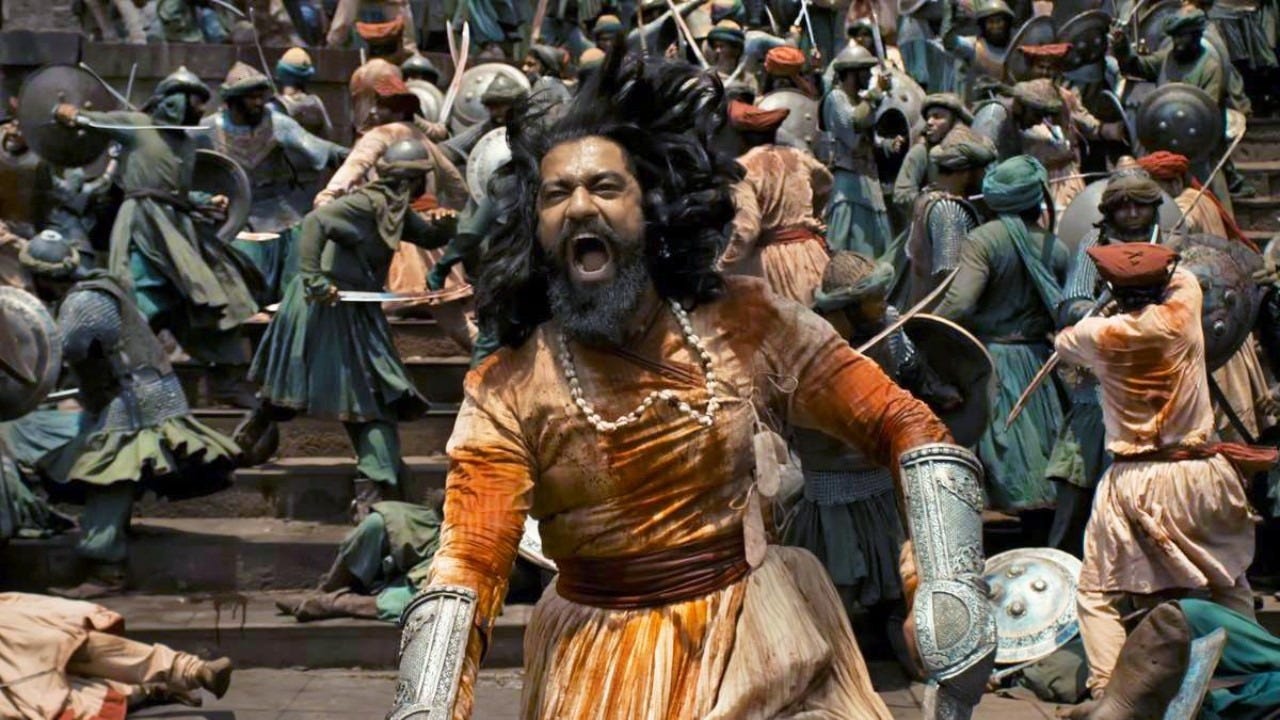
If Tanhaji wasn’t enough, hop on to the Chhava bandwagon for a minute. Chhaava has been claimed to be based on the life and battles of Chhatrapati Sambhaji Maharaj, the second ruler of the Maratha Empire, focusing on his conflict with Mughal Emperor Aurangzeb, his valor, and his ultimate sacrifice for the Maratha kingdom. However, the movie itself frames Hindu rulers as romantic heroes and Mughal invaders as monsters, which cannot be claimed without any proper historical accounts — unless, of course, one aims to appease a certain chunk of the population, and stroke their ego of religious superiority. Several scenes from the movie actually align with the narrative of villainizing the enemy (Mughals) without context or historical facts: a Muslim girl spared by the hero (to score points), an innocent shepherdess burned alive by Mughal soldiers, and so on — all to only fan the fire of unambiguous martyr narratives.
And I’m not sure if I can, at all, talk about Dhurandhar, because—who am I kidding—my nerves most possibly wouldn’t cope very well with a rabid troll-attack. But since I enjoy the perks of not being a public figure, let me do it anyway. Then again, what else is left to say about the movie that’s made as an unabashed endorsement of the current BJP government in the country, while heavily diminishing the line between nationalism and ideological reinforcement. All those who have called it “sophisticated filmmaking” can bark in the background — this, yet another Aditya Dhar directorial, is yet another exhausting and relentless flagbearer of pro-Hindutva nationalism that’s only propelled by ever-inflamatory anti-Pakistan narratives.
And you’d be kidding yourself if you thought that these narrative-building exercises were limited only to the screens — “entertainment purposes only.” In reality—as it always does—the reel spilled into the real world, and the country stood still as witness.
Violence bridging the gap between reel and real
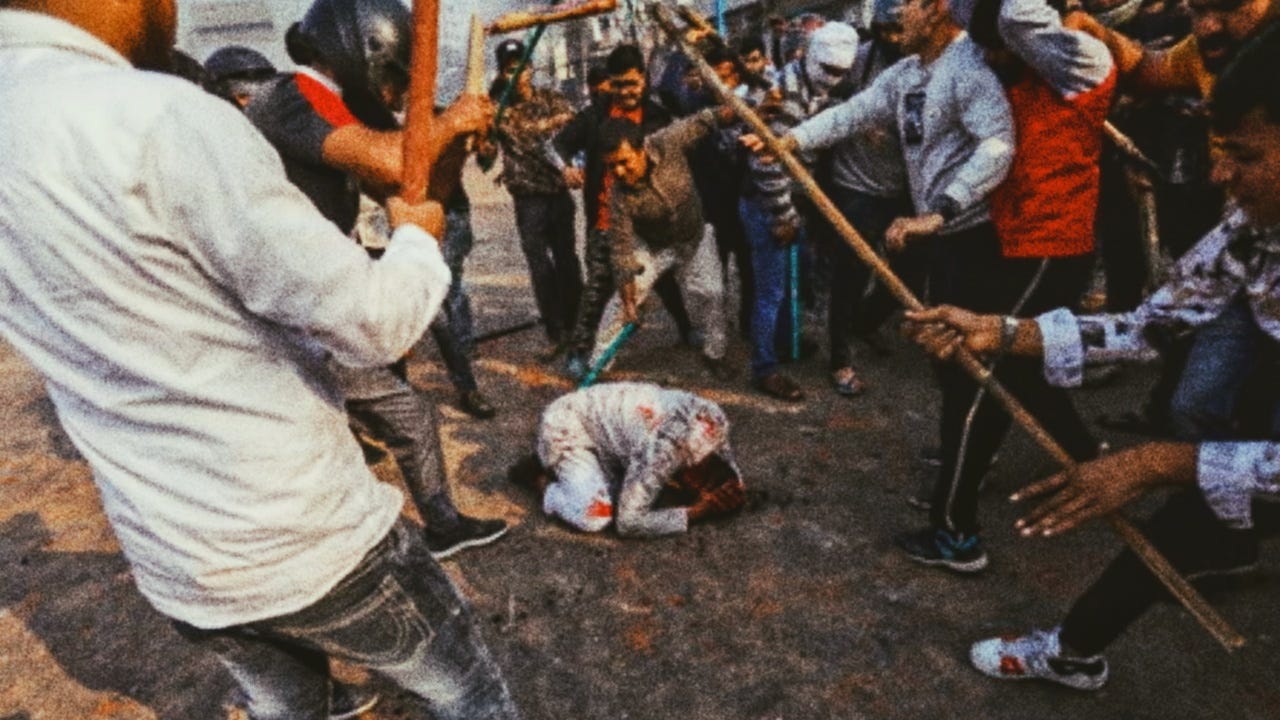
Even before the new year could start properly, reports of a wave of assaults in Odisha made headlines: curfews, cancelled festivals, and lynchings of Bengali-speaking Muslims by self-styled cow vigilantes. One video even showed a Muslim man being beaten, forced to chant “Jai Shri Ram” and call the cow his mother. In some cases, police even initially filed charges only under cattle laws, ignoring the obvious motive of “hatred.” Politicians took the cue, and the age-old whataboutery was on, but what kept coming back were the flashbacks of those moments when a Muslim man was beaten, while being forced to chant “Jai Shri Ram.”
And that’s not because it was absolutely bone-chilling—it was—but because how frequently that same bloody moment was coming back as a haunting reminder, while we were busy reducing the victims into mere statistics.
And in case you wanted statistics…
In 2019, 24-year-old Tabrez Ansari was beaten to death in Jharkhand after being forced to chant "Jai Shri Ram" and "Jai Hanuman.” In 2020, during the Delhi riots, multiple Muslim men were lynched and killed by mobs, with some being forced to chant "Jai Shri Ram.” In fact, as reported by The Hindu, nine Muslim young men were killed and their bodies thrown in a drain during the February communal riots in north-east Delhi, and all of them were forced to shout “Jai Shri Ram” before they were stripped, thrashed, and bludgeoned to death.
That’s not the end of the streak of horror.
In 2023, in Haryana, a Hindu procession turned violent in Nuh district. Two home guards were killed as mobs tried to block a VHP march. Opposition leaders branded the government’s response as “dirty politics,” accusing it of inciting the tensions in the first place. And within hours, mobs in nearby Gurugram torched a mosque and Muslim shops, even killing the 22-year-old imam of Sector 57’s Anjuman Jama mosque. What’s more? According to several credible reports, assailants were seen and heard chanting slogans like “desh ke gaddaron ko, goli maaro saalon ko.”
Need more instances of jingoism seeping into the real world?
For those who still have the privilege to stay politically ignorant, unaware, and indifferent, that is a line eerily echoed by some BJP politicians during earlier anti-CAA rallies — the same political party, the Prime Minister of India is part of.
Of course, through it all, the Vishwaguru remained in his Vipasana mode, because — oh well, who has the time when they have *so much* Mann Ki Baat!
But this wasn’t the case all along;
Once upon a time, Bollywood was a nourishing ground for films that made “deshprem” as simple and easy as breathing — no one was measuring the decibel one was shouting at, nobody kept a count of how many bodies went to the ground, and I swear to all the country gods and goddesses, it didn’t need to be performative.
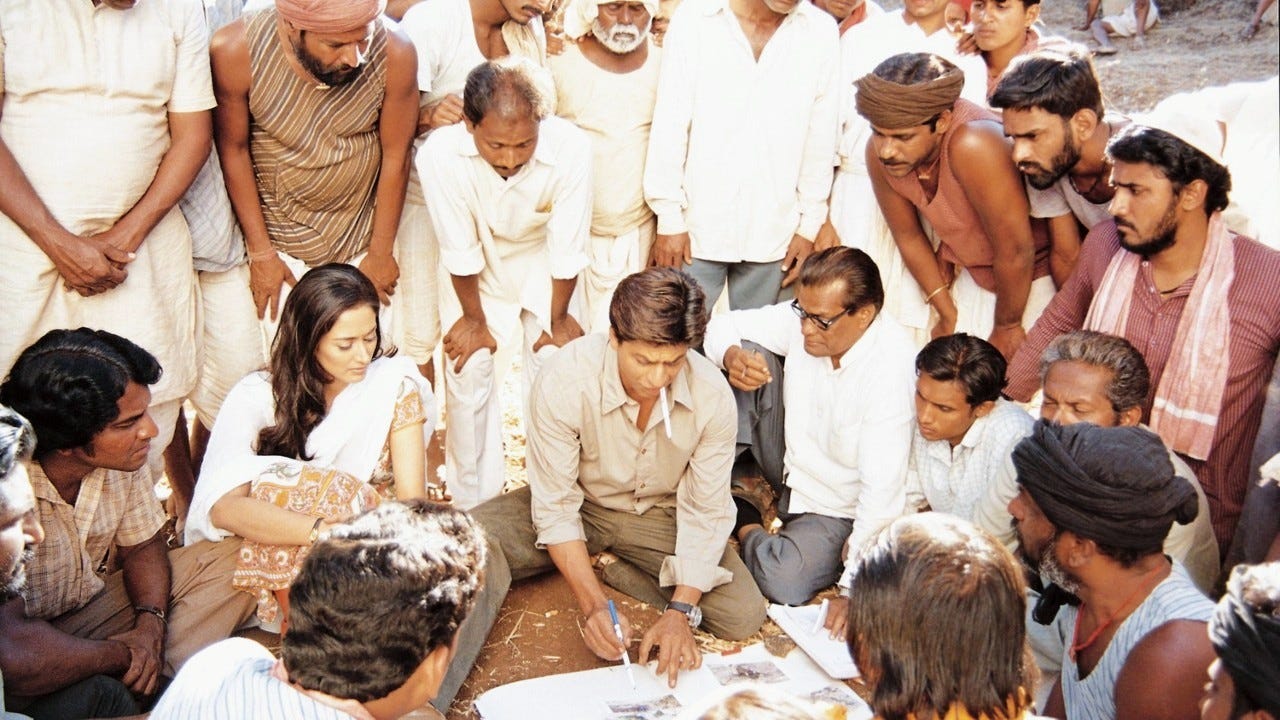
Something as simple as a bulb-lighting scene seemed like statecraft — small acts of service as patriotic gestures. Swades’ NASA engineer Mohan’s (Shah Rukh Khan) return to a small, impoverished village made those living abroad for a livelihood believe in the distant yet attainable dream of homecoming. Rang De Basanti’s youngsters’ love for their friend, and for the motherland, spoke to the singular truth we all felt in our bones: “Koi bhi desh perfect nahi hota… use perfect banana padta hai.”
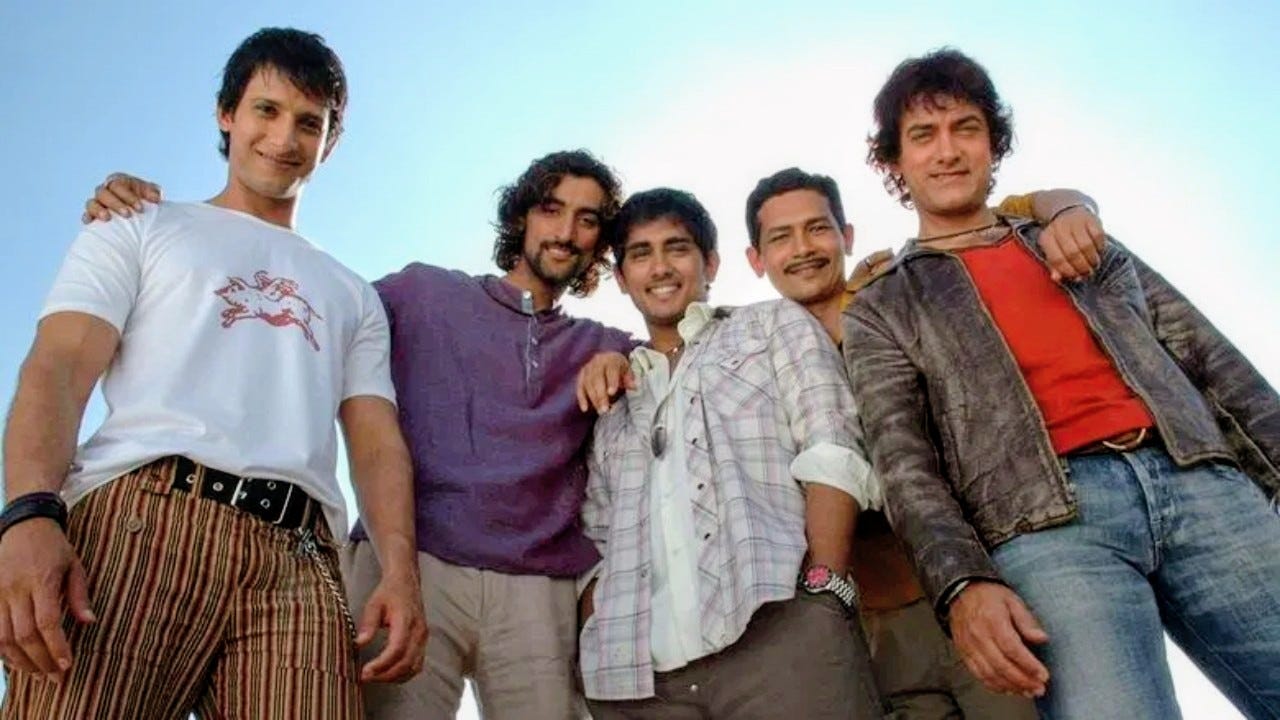
The Bollywood I grew up on looked at patriotism and treated it like any other great affection — unbounded, despite imperfections and flaws. But it didn’t come with clauses of unquestionable devotion and allegiance and zero space for critical queries, leading to total blinded submission. Rather, back in those days, movies like Rang De Basanti argued that patriotism isn’t just a piece of heirloom inherited from our ancestors, with which we can claim our motherland — patriotism is practiced through everyday actions and consciousness. That, it isn’t a medal to flaunt — it is the feast we share with our fellow countrypeople. That loyalty to your country doesn’t mean submitting to its menace — but speaking truth to power for a better future. Rang De Basanti became one-of-its-own-kind because it not only rejected submission as proof of patriotism, but it also reaffirmed how dissent was the greatest act of service to it.
In fact, I’d even go as far as to say that it was Rakeysh Omprakash Mehra’s directorial that shaped our generation’s idea of resistance, assuring us how questioning the authority becomes an act of fidelity to constitutional values like justice and equality. More than anything, RDB told us, patriotism only fails when we refuse to speak up and stand up, conforming to blind obedience.
I wasn’t even a teenager when I first watched RDB, and I’ve never not cried watching that film — even though I’ve watched it countless times. Imagine making something as layered as patriotism feel so easy to understand for a 12-year-old that she could realise how much she loved her country and her people! To her, what even is a concept of a country if not a bigger circle of her people!
I watched Swades much later — blame it on Shah Rukh Khan, for not promoting it properly when it originally came out. But I’m glad that I watched it a little later — a little more mature and with a better understanding. Because otherwise, I’d have been remiss in fathoming how much humility it could take to show up with immense love for your motherland, with a quiet strength and resilience, despite its faultlines and shortcomings — and strive to make it better, together, every single day!
And why not films like Raazi, or Sardar Udham?
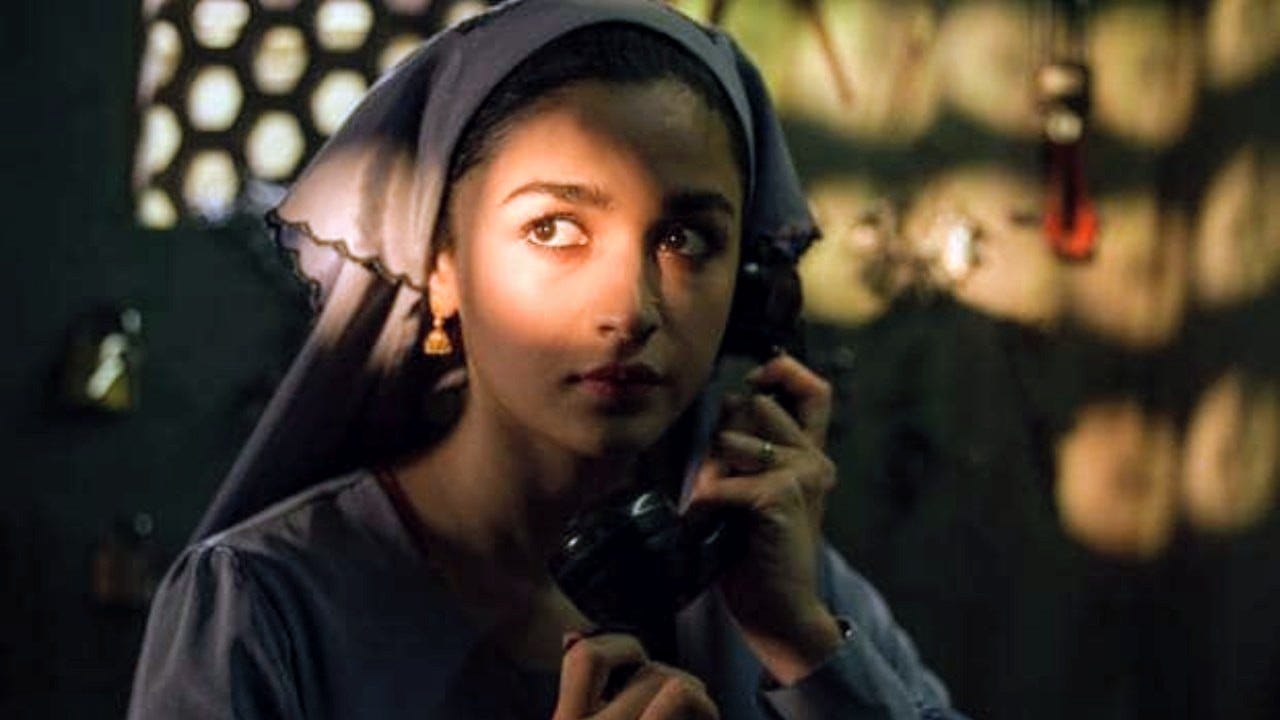
Raazi emerged as a testament to Sehmat’s loyalty to her country — beyond religion, beyond the generic binarification that prevails in present-day India, and even beyond the borders. Raazi didn’t question the allegiance of a Muslim Kashmiri, who was married off in a Pakistani family so that she could serve as an unlikely spy for India — rather, it honored her sacrifice. Raazi showed how serving one’s country is always an individual moral choice, and not defined by their communal identity.
As for Sardar Udham, director Shoojit Sircar — well-known and revered for his brilliance in nuance and subtlety — emphasized the theme of secularity in the film, in a time when the very fabric of it in this country is in question. In the film, Udham renamed himself ‘Ram Mohammad Singh Azad’, a conscious choice that stands for India’s virtue of ‘unity in diversity’. What was more poignant, Shoojit explained that Udham’s story was about becoming more human by standing up for equal rights — the kind of qualities we all should take home, given the current circumstances. The film even showed Udham discussing how he wanted ‘justice’ and not mere retaliation, reflecting the core ideals of the Republic rather than just linear revenge. This secular solidarity—a Hindu name, a Muslim name, and “Azad”—was a powerful cinematic affirmation that made us feel part of one nation — sharing one faith, one religion.
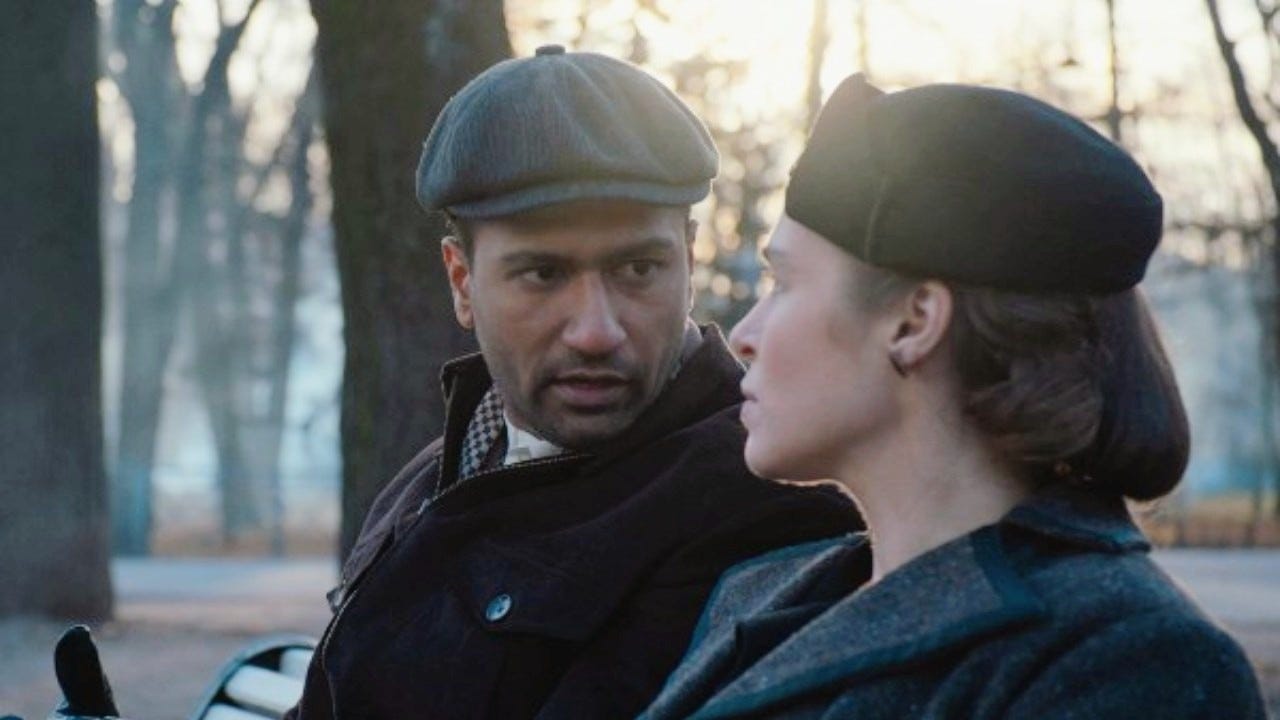
The only irony here is that Vicky Kaushal, who played characters like Udham Singh (in Sardar Udham) and Iqbal Syed (in Raazi), also starred in movies like Uri, Chhaava, and probably more waiting in the pipeline — and not just that, he made it a point to prove just how intellectually incompetent most of the contemporary “stars” are (especially when basking in the financial success of propaganda films) when he said in context of Chhaava: "Desh Prem kabhi formula nahi ho sakta. I think desh prem ko formula kehna desh prem ki insult hai (Patriotism can never be a formula. I think calling patriotism a formula is an insult to patriotism)."
But I don’t want to hold grudges against Vicky Kaushal — I just want those days back when watching something branded as “patriotic” didn’t turn my stomach and made me wretched for not feeling any emotion beyond disgust. I don’t know how else to put it more simply, but I’m tired of the “josh” of hatred — I’m more miserable seeing that hatred translate into the very real ground of my country. It cannot get any more battered, bruised, and bloodied.
This constant back-and-forth of venom-spewing needs to stop. And we need to go back to those days when filmmakers humanized the mere geography of a land that nationalists cannot stop parading around like an inanimate trophy-like object. We need to go back to those films that made patriotism as simple as caring for your neighbor — because that’s really what it is: looking out for each other, living in harmony, happiness, and joy.
The “josh” can go to hell!